
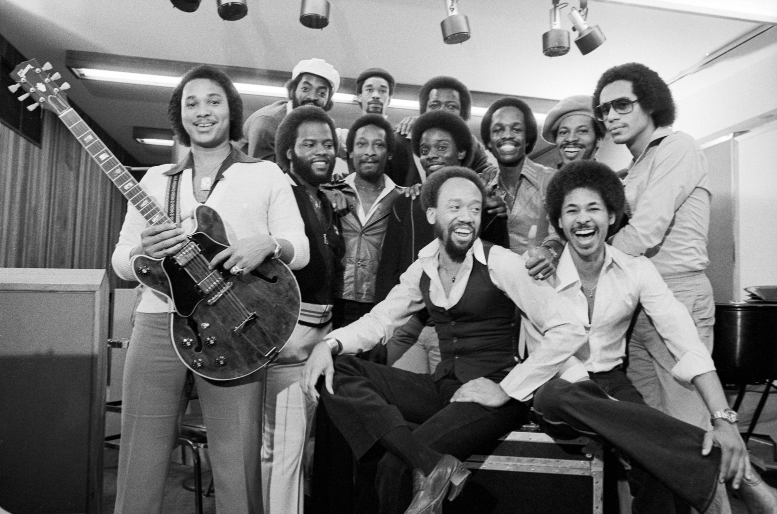
The Tribeca Festival is celebrating its 25th anniversary, and it always strives to make opening night an event. Often, that strategy involves programming a music documentary combined with a live performance. I’ll never forget the night in 2017 when Tribeca premiered a doc about legendary music executive Clive Davis at Radio City Music Hall, with a post-screening concert by Aretha Franklin, Dionne Warwick, Carly Simon, Barry Manilow, Jennifer Hudson, and Earth, Wind & Fire. This year, Earth, Wind & Fire gets their own tribute film, subtitled “To Be Celestial vs. That’s the Weight of the World,” and it’s quite a fascinating tale.
The film begins with the story of the group’s founder, Maurice White, making much of the fact that at age five he was left in the care of his grandmother in Memphis while his mother sought a better life in Chicago. It wasn’t until years later that he finally reunited with his mother and met his seven siblings. In his early twenties he found success as a session drummer at Chess Records, playing on hit records like Fontella Bass’s “Rescue Me” and Billy Stewart’s “Summertime.” Then he joined the popular Ramsey Lewis Trio, best known for the hit “Wade in the Water.” He formed Earth, Wind & Fire in 1969, the name inspired by his devotion to astrology.
The group’s early jazz-infused sound found a small cult following and earned the attention of Clive Davis, who signed them to Columbia Records. In 1974, they were the only Black act to take part in the West Coast rock festival California Jam. One year later, their fourth Columbia album, That’s the Way of the World, became a monster hit, including their first number-one single, “Shining Star.” Hit after hit followed: “Sing a Song,” “Getaway,” “Serpentine Fire,” “Fantasy,” “After the Love Has Gone,” “Let’s Groove,” the Beatles cover “Got to Get You Into My Life,” and their signature song, “September.” (The doc disses their hit “Boogie Wonderland” as a disco sellout, but I still love it.)
The huge ensemble saw many personnel changes over the years, many of them spurred by White’s domineering personality. (Director Ahmir “Questlove” Thompson speculates that White never recovered from his childhood trauma.) His elaborate shows meant the band carried a huge debt, and its members never got to reap the rewards they so richly deserved. White developed Parkinson’s disease in 2000 and died in 2016 at the age of 74, but three of the original 1970s band members—White’s brother Verdine, Ralph Johnson, and percussionist and dynamic falsetto Philip Bailey—continue to perform with EW&F to this day.
Thompson makes the case that Earth, Wind & Fire was a huge influence on many music giants including Stevie Wonder, Michael Jackson, and Prince, and he gets glowing on-camera testimonials from Wonder, Lionel Richie, H.E.R., Barack and Michelle Obama, and the group’s Tony-winning choreographer Donald Faison, who humorously asserts that, no, not all Black people can dance.
Thompson (also Jimmy Fallon’s bandleader and co-founder of The Roots) won an Oscar for Summer of Soul, his wonderful documentary about a forgotten 1969 Harlem music festival, and he’s developed a brisk, kinetic, kaleidoscopic, thrilling visual style. And, of course, it doesn’t hurt that Earth, Wind & Fire’s music is completely irresistible.
The film premiered last night (June 3) at the Beacon Theatre, with a post-screening performance by today’s Earth, Wind & Fire lineup, alongside The Roots. It debuts on HBO Max this Sunday, June 7, 2026.
Sara Bareilles: Good Grief
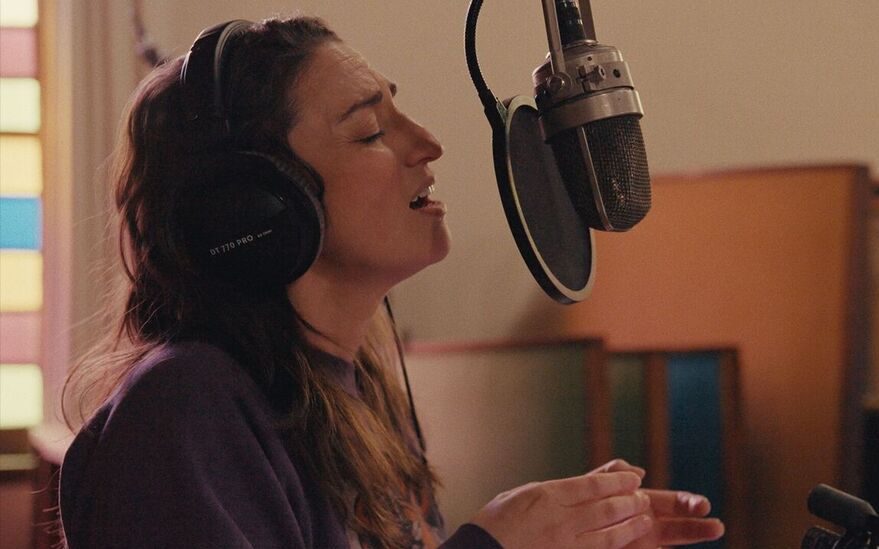
Tonight, the Beacon is hosting another event: the premiere of Sara Bareilles: Good Grief, followed by a performance by the acclaimed singer-songwriter. Josh Alexander’s film documents the artist’s recording of her upcoming album, her first since 2019, over the course of six days in 2025 at the Dreamland Studios, housed in a former church near Woodstock, New York. In its opening moments, the film struck me as too private and personal, as Bareilles and a fellow band member freely discuss their inability to conceive children through IVF—Alexander and Bareilles embrace the reality-TV aesthetic, a genre I actively avoid. But despite my initial misgivings, the film won me over. I’ve always been a fan of Bareilles’s gorgeous voice, and the songs she’s written for her new record—touching on themes of loss and grief—are exceptional. Her new music is also heavily influenced by the untimely deaths of two of her closest friends to cancer: Chad Joseph, her onetime college roommate and longtime tour manager, and beloved Broadway leading man Gavin Creel, with whom she co-starred in the West End production of her hit musical Waitress. The bond between Bareilles and her fellow musicians is palpable, and it’s fascinating to watch them work together to shape her songs.


Leave a Reply