
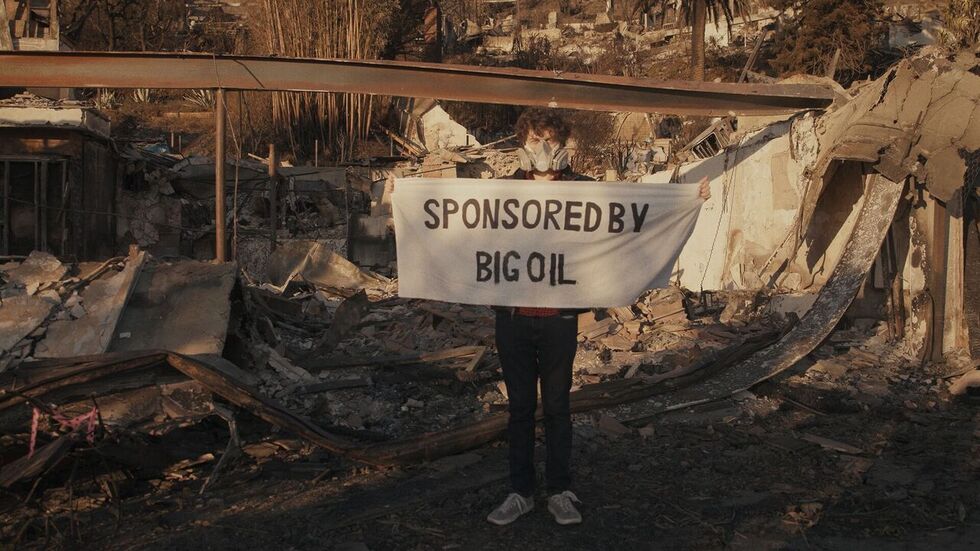
One of the most provocative documentaries at this year’s Tribeca Festival is Just Look Up, a very intimate portrait of the youthful activist group Climate Defiance and its eccentric founder and executive director, Michael Greenberg. In the tradition of the disruptive AIDS organization ACT UP, the members of Climate Defiance justifiably view the climate crisis as a five-alarm fire (literally) warranting rude confrontations with the politicians and business executives who continue to abet the use of fossil fuels. In the opening scene set in January 2024, the group infiltrates a dinner at a Massachusetts country club and their protest action forces Bank of America CEO Brian Moynihan to flee the stage. Other targets of the group’s operations include West Virginia senator Joe Manchin, Alaska senator Lisa Murkowski, and the annual Congressional baseball game (sponsored by Chevron!).
Founder Greenberg is a gay, socially awkward (possibly neurodivergent) but confident crusader with a talent for fundraising, which he combines with an edgy—and genuinely funny—standup comedy act. He’s unapologetic about the group’s aggressive (but non-violent) tactics, noting, “I have a higher pain threshold for being disliked.” A revealing sequence shows him visiting his grandfather in Florida, who still isn’t quite sold on the concept of climate change. (Greenberg maintains remarkable patience here.) But Greenberg does earn the support of several politicians, including California congressman Ro Khanna, Washington congresswoman Pramila Jayapal, and New York’s own Zohran Mamdani.
Emma Wall and Betsy Hershey’s film takes place almost entirely in 2024, with the unfathomable return of Donald Trump posing an ominous threat for the group’s (and the world’s) future. Near the end, Greenberg records an impassioned video amidst the wreckage of the January 2025 California wildfires. One image says it all: the burnt remains of a Bank of America branch.
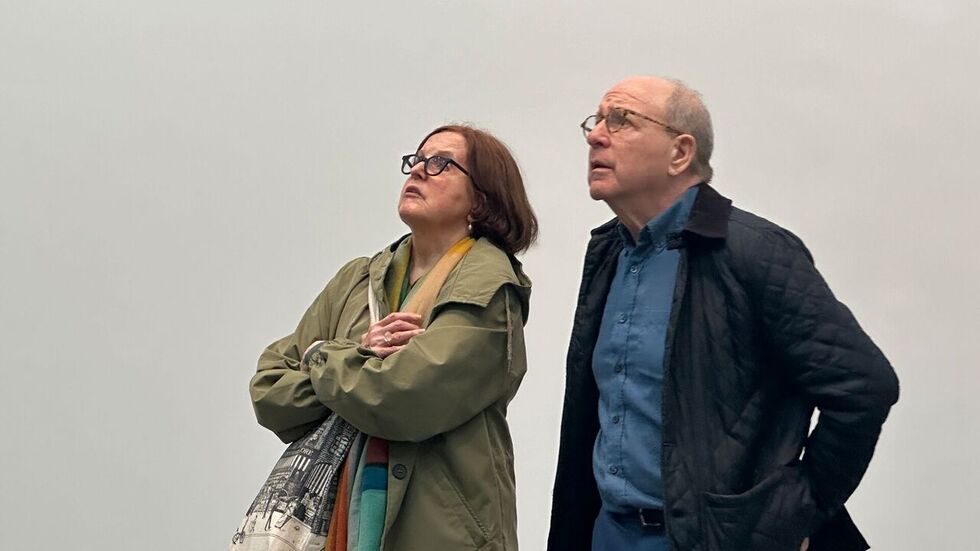
Roberta Smith and Jerry Saltz in House of Criticism
My earlier post on New York-oriented documentaries did not include a latecomer in the festival: House of Criticism, a highly entertaining portrait of one of New York City’s great power couples, former New York Times art critic Roberta Smith and her husband, New York magazine art critic Jerry Saltz. Though their personalities and approach to criticism differ, the two clearly adore each other. Smith worked at the Times for 32 years until her retirement in 2024; Saltz was a failed painter and long-distance truck driver who became a critic at age 41, shortly after his marriage to Smith in 1992. Smith, who confesses to being very insecure, says it was her formidable mother who insisted she always have an opinion about any subject. Saltz’s mother took her young son on a life-changing trip to the Art Institute of Chicago days before committing suicide; his father “never mentioned her again.” Smith became a protégé of famed sculptor and critic Donald Judd before striking out on her own. Her method is to get very close to the paintings she’s writing about and to be open-minded, as “history is not linear.”
The couple’s apartment life in the East Village is surprisingly unglamorous: When you’re seeing 25 to 30 shows a week, there’s no time to go out for dinner and microwaved meals will do just fine. Alison Chernick’s film also shows them at work, visiting various galleries and demonstrating their seemingly effortless analytical brilliance. Smith and Saltz make great company, and their love story is disarming.
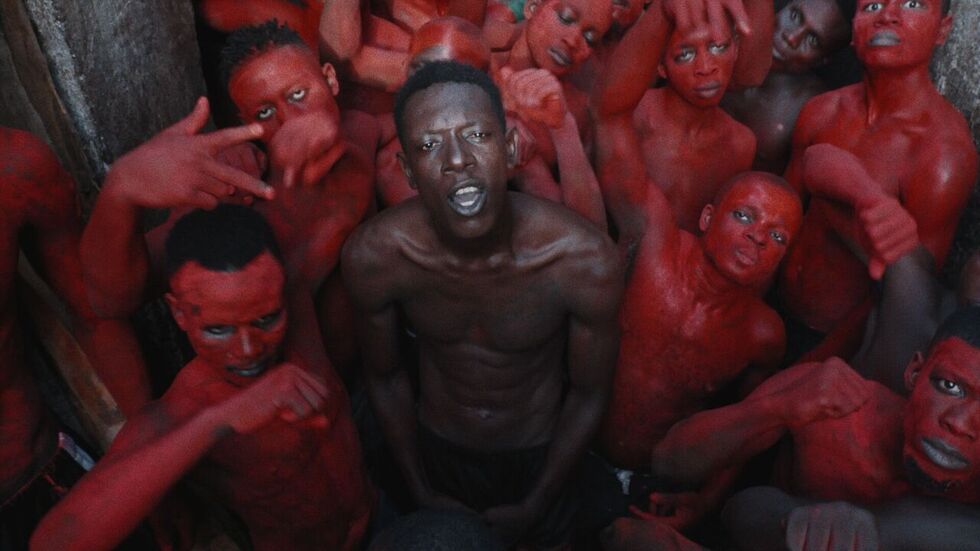
Empereur in Jail Time Records
Art of a very different stripe is the subject of Jail Time Records, winner of Tribeca’s Documentary Feature award. Steve Happi and Dione Roach’s film takes us inside Douala Prison in Cameroon, a hellhole housing 6,000 prisoners and only 800 beds. (Most of the inmates sleep under the night sky.) A dapper prisoner named La PJ is our guide to this harsh, overwhelming environment, the camera sweeping past hundreds of sullen occupants. But the one amazing saving grace of the prison is that it has built a recording studio where aspiring singers and rappers can record music based on their lives and send it out into the world via social media—they even have the wherewithal to create elaborate music videos. The film focuses on three rappers: fierce drug dealer Empereur, remorseful killer Stone, and wacky getaway driver Transporteur. With the help of their in-house producers, they create beats and videos that could be their ticket to a better life.
With its virtuosic camerawork, Jail Time Records is a truly immersive experience, finding joy and humanity amid the outrageously inhumane squalor of Douala Prison. Somehow, you’re grateful for your time served there.
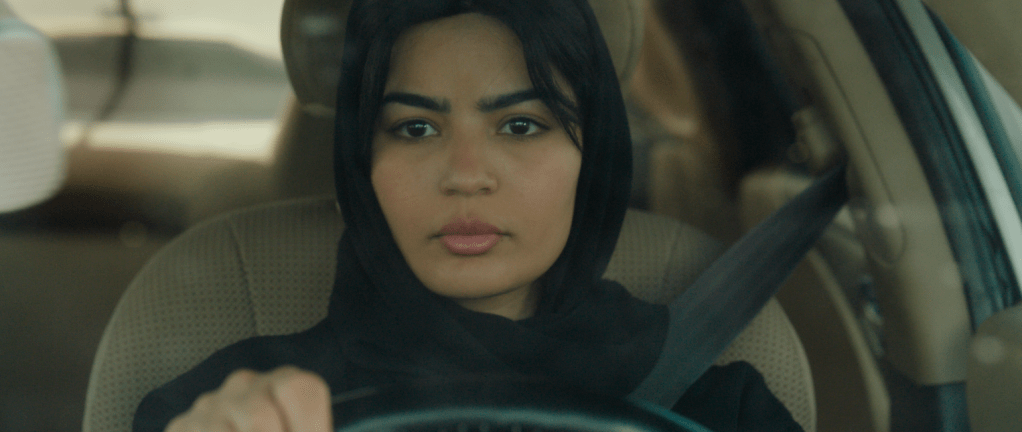
Mila Alzahrani in Unidentified
I’ve been focusing on the many documentaries showcased at Tribeca. Now, two narrative highlights. Director Haifaa Al-Mansour made news in 2012 with Wadjda, the first feature film shot entirely in Saudi Arabia and the first feature made by a female Saudi director. Along with establishing a Hollywood career that includes 2017’s Mary Shelley, she’s made two more features in Saudi Arabia: The Perfect Candidate (about a female doctor running for city council) and now Unidentified, a most unusual detective story. Perfect Candidate star Mila Alzahrani plays Noelle, a police precinct clerk who is recruited to bear witness when a teenage girl’s body is found in the desert. No family member has come forward to report the girl’s absence, and Noelle, a devotee of true-crime podcasts, makes it her personal mission to investigate the murder and identify the victim. Not surprisingly, Noelle meets resistance from her male superiors, from the school the girl attended, and from the family she suspects is not speaking up out of shame over the girl’s rebelliousness.
It’s striking that a film like this can be made in Saudi Arabia with such a gutsy female lead character—just the fact that she drives from place to place is notable, since women weren’t permitted driver’s licenses until 2018. Along with her amateur sleuthing, Noelle has defied tradition by leaving her husband, who failed to act honorably after they lost a child. Noelle’s personal demons play a role in a final-act twist you won’t see coming. In all, a surprising tale and a revealing look at today’s Saudi Arabia.
The Leader
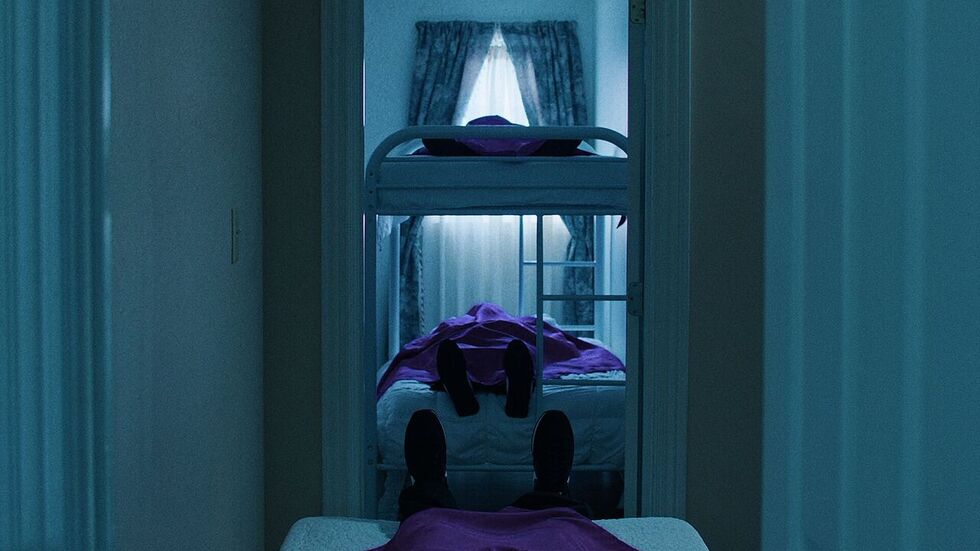
The Leader is such a bizarre story, it would be beyond belief if you didn’t know it was true. Writer-director Michael Gallagher’s drama recreates the saga of Heaven’s Gate, the extremely strange cult founded in 1974 by Marshall Applewhite and Bonnie Nettles. According to the film, the couple met in a hospital psych ward—he had overdosed on pills, she was his nurse, and the connection was instantaneous but completely asexual. The cult they created, based on their mutual belief that they were destined for a higher existence abetted by UFOs, demanded that their members be celibate and adopt odd pageboy haircuts and gender-neutral clothing. Nettles left the planet prematurely in 1985 when she died of liver cancer; twelve years later, Applewhite and 38 followers, dressed identically in black sweatpants and Nikes, blissfully committed mass suicide by taking lethal doses of phenobarbital.
Gallagher’s approach is effectively disorienting because all this madness is seen from the perspective of the cultists themselves—outsiders appear only infrequently. Veteran actor Tim Blake Nelson, with his diminutive height and decidedly anti-leading-man mien, is perfect casting as the crazed Applewhite, and Vera Farmiga is chilling as the weirdly authoritative Nettles. TV star Jim Parsons is a revelation as one of their most devoted acolytes, and Simon Rex and Grace Caroline Currey are memorable as a couple who violate the celibacy rules, with grisly results. Most disturbing of all is the realization of how susceptible many human beings are to patently false prophets. This story of a doomed cult is all too relevant in 2026.
At top: Michael Greenberg in Just Look Up. All photos courtesy of the Tribeca Festival.


Leave a comment