
Every year at the Tribeca Fest, I gravitate toward their documentary offerings. (To quote Forrest Gump, when it comes to their narrative selections, you never know what you’re going to get.) I’ve already written about four of their New York-oriented docs. Here are four more documentaries that were well worth my time.
Hollywood Does Abortion begins with a clip from a groundbreaking 1972 episode of Norman Lear’s sitcom “Maude,” in which the middle-aged title character learns she’s pregnant. Ultimately, in part two of “Maude’s Dilemma,” the formidable Tuckahoe, New York wife and mother decides to have an abortion. As her husband Walter assures her at the end of the episode, “In the privacy of our own lives, you’re doing the right thing.” At the time, abortion was legal in several states including New York, but this was two months before the landmark Roe v. Wade decision impacting the entire nation. Only Lear’s clout as one of the most successful television producers of the era could have made the episode possible (though many, many affiliates refused to rebroadcast it).

For filmmakers Barbara Attie, Janet Goldwater, and Mike Attie, “Maude” is the exception that proves the rule that the movies and TV that followed were extremely circumspect when it came to the topic. The majority of TV series excerpted here never “go all the way” when it comes to abortion; the woman in question invariably decides to have the child, or has a miscarriage, or gets her period. According to the film, Hollywood’s tales don’t reflect the reality: Ten percent of women opting for the procedure die onscreen, compared to .0001 percent in real life. Thirty-three percent of fictional women have medical complications, versus 2.1 percent in reality. Ten percent have negative mental-health outcomes, which studies say is pure fiction.
There are some startling offenders here, most notably a 2009 “Law & Order” episode which smeared the reputation of murdered late-term abortion provider George Tiller. The filmmakers also take issue with the Marilyn Monroe biopic Blonde and the compromises in Knocked Up and Juno. Coming in for praise are Jennifer Jason Leigh’s non-traumatic abortion in Fast Times at Ridgemont High, independent comedies Citizen Ruth and Obvious Child, and the entire oeuvre of massively successful TV producer Shonda Rhimes. (Her long-running “Grey’s Anatomy” immediately tackled the dire consequences of the 2022 overturning of Roe v. Wade.)
Apparently because of the filmmakers’ decision to use “Maude” as their jumping-off point, there’s no pre-1970s history here of Hollywood’s approach to abortion—a rare occurrence, but prominent in films like Blue Denim (1959) and Love with the Proper Stranger (1963). That caveat aside, this is an eye-opening documentary with a forthright point of view.
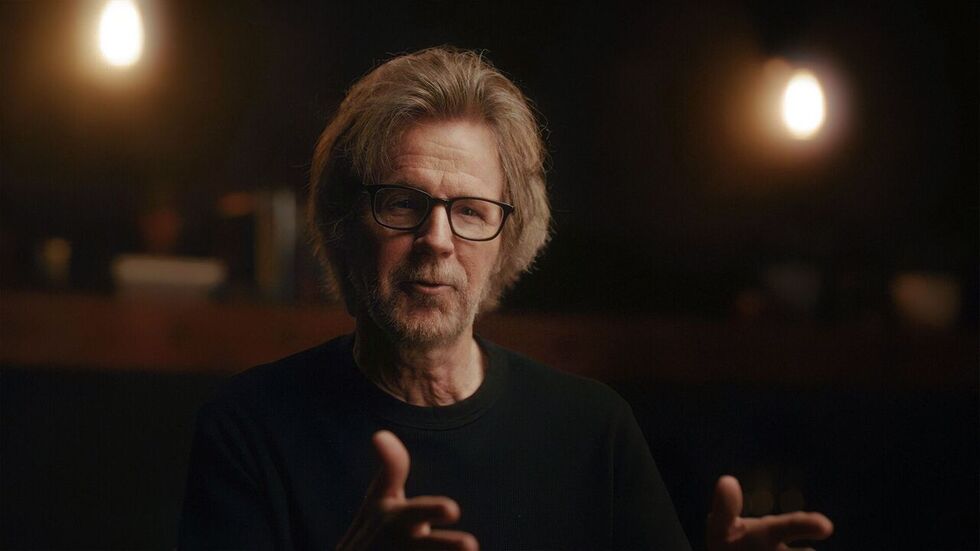
Dana Carvey in Playing POTUS
Another documentary offering a wealth of TV clips is Playing POTUS, an entertaining compendium of the many, many comedians who’ve impersonated the President of the United States. No doubt there were FDR imitators in the heyday of radio, but the doc begins with one of the most successful mimics, someone who’s largely forgotten today: John F. Kennedy impressionist Vaughn Meader. His “First Family” LP was enormously popular and actually won the Grammy for Album of the Year. Meader’s stardom ended, of course, with JFK’s assassination in 1963.
Other early impressions get short shrift, such as David Frye’s Lyndon Johnson and Richard Nixon and Rich Little’s Nixon. In fact, Josh Greenbaum’s doc is so dominated by 50 years of “Saturday Night Live,” it could have been part of Peacock’s anniversary package. Still, it’s fun to glide through the years with the comedy institution’s roll call of impressions: Chevy Chase’s Gerald Ford (not an impression at all, and a completely inaccurate portrayal of POTUS as accident-prone), Dan Aykroyd’s Jimmy Carter, Phil Hartman’s Ronald Reagan, Dana Carvey’s George Bush, Hartman’s and Darrell Hammond’s Bill Clinton, Will Ferrell’s George W. Bush, Alec Baldwin’s and James Austin Johnson’s Donald Trump. Some impressions fell flat: Fred Armisen was a problematic Barack Obama until they found an actual Black man, Jay Pharoah, to play him, and the rotating Joe Bidens never caught fire. The doc also goes off-topic with a few POTUS-adjacent but memorable “SNL” impressions: Tina Fey as Sarah Palin, Kate McKinnon as Hillary Clinton, and Maya Rudolph as Kamala Harris.
In contrast to our current infant-in-chief, George Bush proved an extremely good sport, seeming to thoroughly enjoy Dana Carvey’s wacky riff on his nasal delivery and odd hand movements. Meanwhile, Alec Baldwin relishes reading his snarky responses to Trump’s mean tweets. Hammond recalls meeting Bill Clinton and finding him disturbingly seductive, while Ferrell admits guilt that his addled but amiable impression of W probably helped get him elected. (Hammond’s prissy Al Gore was also surely a factor.)
One of the few non-“SNL” performers to get ample screen time is Keegan-Michael Key, who explains the genesis of his character Luther, Obama’s “anger translator”: As a mixed-race man and the first Black president, Obama had to be adept at code-switching, acting differently with different races of people.
For me, a major omission in the film is Anthony Atamanuik, whose portrayal of Donald Trump on Comedy Central’s “The President Show” is a savage classic. It also would have been nice to include Sarah Cooper, whose lip-synching of Trump’s inanities became an internet sensation. Playing POTUS should have cast its net wider, but it remains a very agreeable 90 minutes.
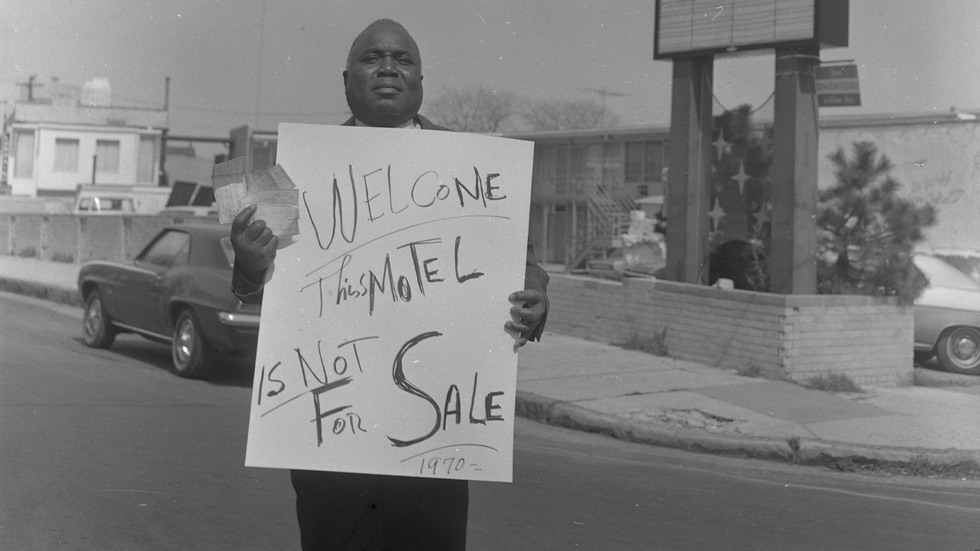
Political history also plays a role in the story of The Lorraine, from director Sam Pollard (Two Trains Runnin’, MLK/FBI). African-American couple Walter and Loree Bailey took over the Marquette Hotel in Memphis, Tennessee in 1945 and renamed it the Lorraine, inspired by the song “Sweet Lorraine.” In those benighted days, Black visitors were not permitted to stay in white establishments, and the Lorraine—not far from the legendary Beale Street—became the destination for Black entertainers staying in Memphis. It was also the de facto second home for the Black musicians like Otis Redding, Carla Thomas, and Sam and Dave who made Memphis-based Stax Records a national force—Eddie Floyd’s hit “Knock on Wood” was written in room 302.
In 1964, with the passage of the Civil Rights Act outlawing segregated businesses, Walter Bailey suddenly had to compete with other Memphis hotels. He made a huge investment in 36 additional rooms with drive-up access, a second floor, and a swimming pool and renamed his business the Lorraine Motel. Then everything changed on April 4, 1968, when Martin Luther King, Jr. was assassinated while standing on the balcony of room 306. Loree Bailey was so devastated by the murder she suffered a cerebral hemorrhage and died five days later.
After King’s murder, business for this onetime Memphis institution plummeted. Walter Bailey declared bankruptcy in 1982 and died in 1988. A decade-long campaign to turn the site into a museum (initially against the wishes of the King family) finally bore fruit when the Lorraine opened as the National Civil Rights Museum in September 1991. Today, visitors can actually enter the room King stayed in just before his assassination.
Among those recounting the Lorraine’s story are Stax stars Carla Thomas and Eddie Floyd, former United Nations ambassador and Georgia congressman Andrew Young (a witness to King’s killing), and the Baileys’ daughter, Caroline Bailey Champion. I’m glad that story will now reach a wider audience.
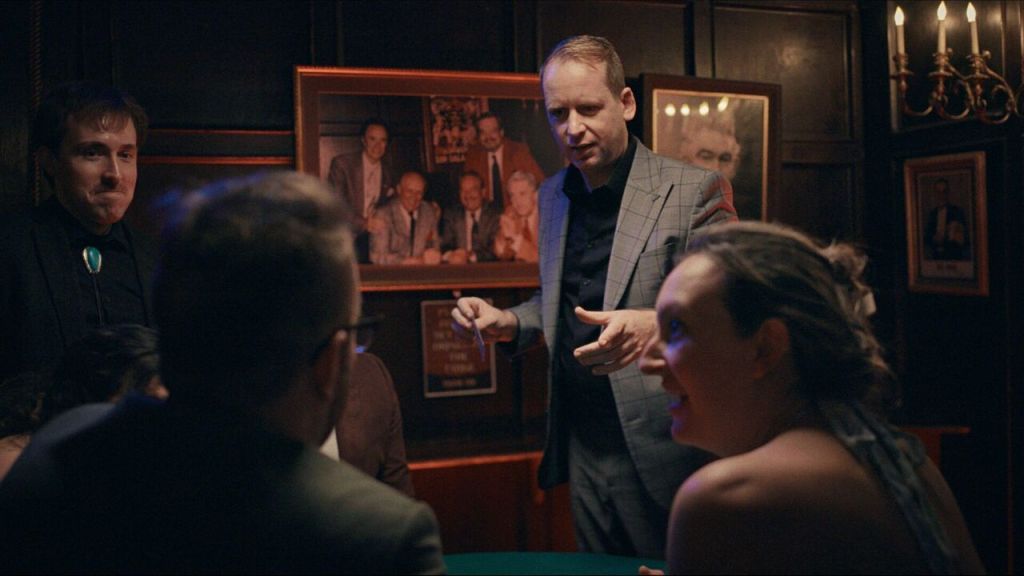
Andi Gladwin in Stealing Magic
One of the more surprising documentaries at Tribeca is Stealing Magic, a movie that plays more like an investigative thriller than a nonfiction account. Matthew Testa’s film immerses us in the world of professional magicians, and the fact that many of them make a living by selling their proprietary secrets. But, as with the movie business, an anonymous pirate has been stealing their intellectual property and selling it online at an insanely low price. Magician Andi Gladwin makes it his mission to track down the criminal and put him out of business, a quest that takes him to Paris, Prague, and Egypt. Testa’s cameras are there for the entire globe-trotting journey and its many twists and turns. The film becomes increasingly ominous as we learn just how ruthless the mysterious Erdnase (named after a pioneer of card tricks) can be. Oh, and there are also a couple of warehouse fires that may or may not be coincidental. The film is unexpectedly riveting, both for its espionage story and the virtuosic tricks that no one should be ripping off.
At top: Walter Bailey in The Lorraine. All photos courtesy of the Tribeca Festival.


Leave a comment