The Tribeca Festival was created in 2002 by Robert De Niro and his business partner Jane Rosenthal with the intention of reinvigorating the area of Manhattan impacted by the destruction of the World Trade Center on September 11, 2001. So it’s no surprise that the 25th edition of the festival would include a new documentary recalling the horrific events of that day. There have been many films about 9/11, but IX XI (the Roman numerals evoking both the Twin Towers and their demise) takes a novel approach, with mixed results.
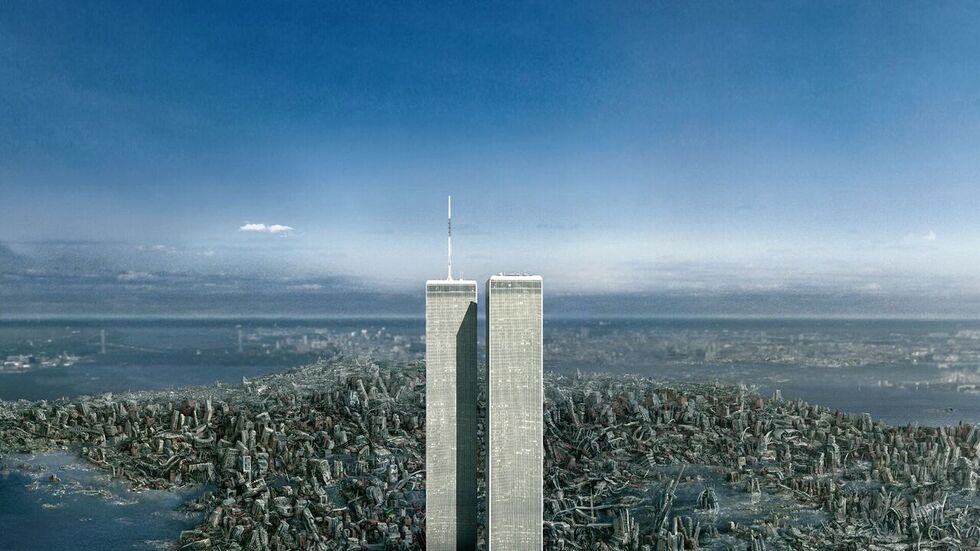
Director Sean Wilsey focuses on a dozen individuals and their memories of the attack, but his varied subjects represent not the first responders and on-the-scene witnesses but ordinary people like all of us who can’t forget that day. They include two celebrities (actor Griffin Dunne and New Yorker cartoonist Roz Chast), a skateboarder who frequented the space, a UPS driver, a Tibetan restaurateur, and a realtor who was showing off a view of the Towers when the first plane hit. One interviewee was on the other side of the country—a young California Muslim woman whose classmates viewed her very differently after the attack. Wilsey’s most authoritative subject is ABC News cameraman Stefan Springman, who, along with reporter Chris Cuomo, commandeered a pizzeria’s bicycles to race to the scene.
In an effort to keep his talking-head movie visually interesting, Wilsey films his subjects in a mirrored room at a table with a reflective water surface meant to evoke the Memorial’s pools. But the frequent right-side-up/upside-down effect becomes tiresome all too quickly, as does the bizarre selection of clips from The Sound of Music, Scarface, and The Lord of the Rings. Some of the interviewees’ anecdotes are poignant, even humorous, but just as many are mundane and only tangentially related to the day’s trauma. In all, a C+ effort to bring something new to the 9/11 story.
Mario
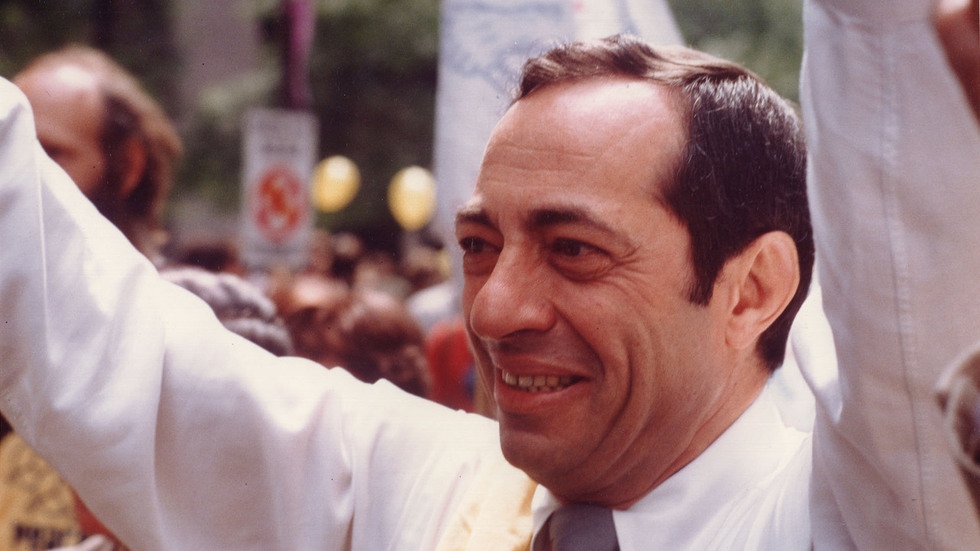
Tribeca has a tradition of programming documentaries with a New York connection, and this year is no different. Peter, George, and Teddy Kunhardt’s Mario pays tribute to a memorable New Yorker, Mario Cuomo—memorable both for what he accomplished and for his reticence to rise higher in the Democratic Party. The Cuomo name has been tarnished by the scandals that led to his son Andrew’s resignation from the New York governor’s office in 2021, but I’ve always admired Mario for his decency, compassion, and intellect. The Kunhardts’ documentary chronicles the prejudice Mario Cuomo faced as a young law school graduate with an ethnic name, first in his class but unable to book an interview with a law firm, and his subsequent success battling City Hall for his working-class clients. He ran for mayor of New York and lost to Ed Koch, but soon rose to statewide office, first as lieutenant governor, then as governor.
Cuomo showed compassion during the AIDS crisis and was threatened with excommunication from the Catholic Church when he refused to change his pro-choice stance on the issue of abortion. The doc frequently contrasts his pro-government philosophy with Ronald Reagan’s eagerness to rip apart the social safety net. No doubt the high point of Cuomo’s career was his powerful keynote speech at the 1984 Democratic National Convention, in which he deflated the myth of Reagan’s “shining city on a hill.” Democrats viewed him as the future of the party, but Cuomo—dubbed “Hamlet on the Hudson”—kept backing away from a presidential bid. As Andrew Cuomo notes in the film, “You need a really strong ego to say this country needs me and only me—that’s not who he was.” But the younger Cuomo also observes that his dad often thought of himself as the smartest person in the room—a flaw Mario certainly passed down to his arrogant son.
The film also includes interviews with Cuomo’s daughters Margaret, Maria, and Madeline, son Chris, and Mario’s elegant widow Matilda, plus commentary from historian Jon Meacham and columnist Ken Auletta. Cuomo’s critics are notably absent, but the doc offers a welcome reminder of what a humane politician looks like.
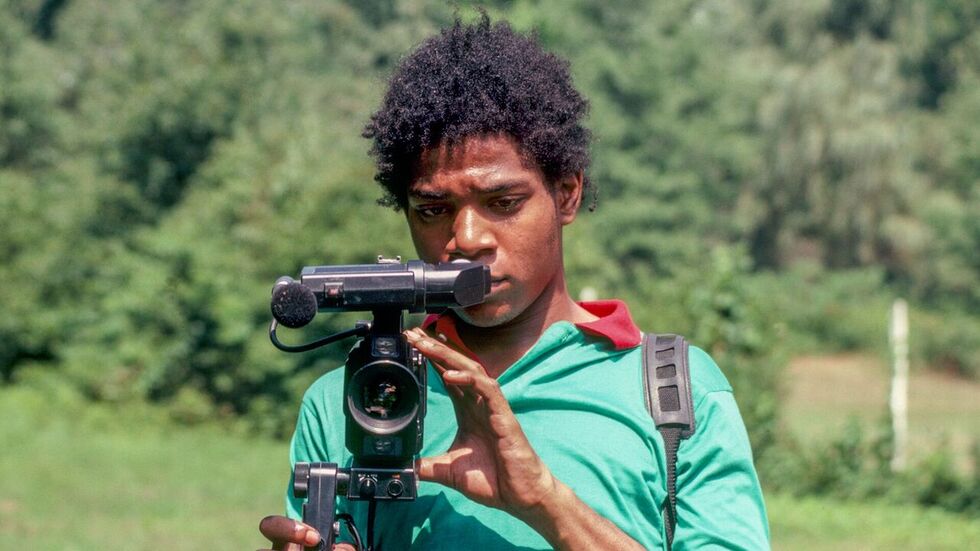
Another very notable New Yorker was Jean-Michel Basquiat, the graffiti artist turned groundbreaking and wildly successful painter who died in 1988 at the age of 27. Quinn Whitney Wilson and Viridiana Lieberman’s Jean-Michel is not the first film devoted to the artist—past movies include Julian Schnabel’s biopic Basquiat, the experimental Downtown 81 (in which the artist played himself), and two documentaries, Boom for Real and The Radiant Child—but it’s the most comprehensive. One of its primary missions is to explode the myth of Jean-Michel as a homeless kid who hit it big. In reality, he was the son of a Haitian immigrant who prospered in the New York business world and he had a loving mother and two younger sisters who are credited as executive producers here. His siblings remember him as hyperactive and restless, and eager to be on his own after his parents divorced.
Jean-Michel’s style reflected that hyper personality, employing text, numbers, and arcane symbols mixed with his own brand of political commentary. Some critics condescendingly viewed the surface crudeness of his canvases as a function of his race, but today Basquiat’s paintings fetch some of the highest prices in the art world. A turning point was his friendship with Andy Warhol: When their collaborative efforts were savaged by critics, they became estranged. Then Warhol died, and Jean-Michel sank further into his heroin addiction. Incredibly prolific, Basquiat left behind a huge body of work, which feeds the film’s sometimes overwhelming collage editing style. I often wished the filmmakers had slowed the pace, but perhaps Jean-Michel would not have approved.
Mineshaft: The Cruising Murders
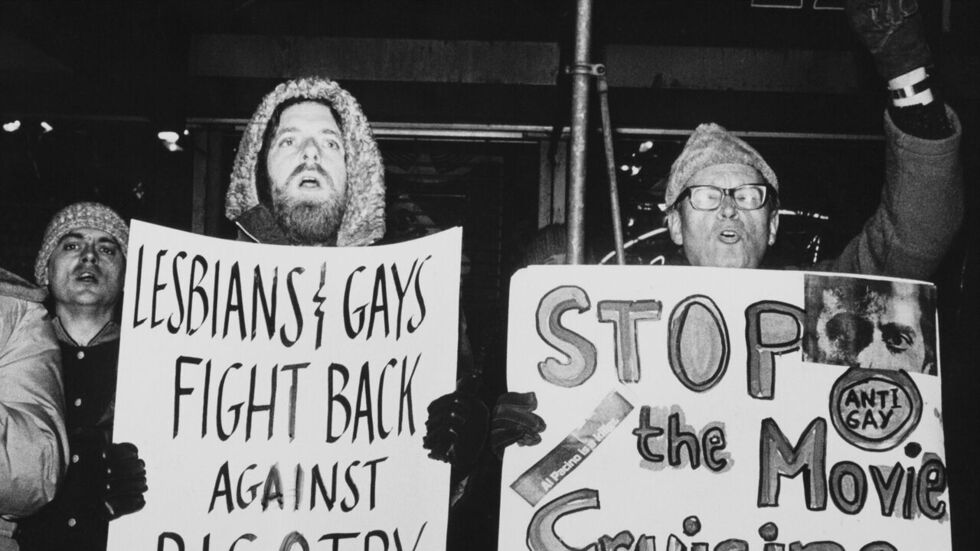
In 1980, around the time Basquiat first gained notoriety, one of the most notorious films in movie history debuted: William Friedkin’s Cruising. Mineshaft: The Cruising Murders tells the story of the making of that film—and the real-life killing that inspired it. Addison Verrill was a film critic and reporter for Variety who frequented New York City’s leather bars. At the bar called the Mineshaft he met and went home with Paul Bateson. After a night of unsatisfying sex, Bateson hit Verrill with a frying pan and stabbed him. When Bateson was convicted of Verrill’s murder two years later in 1979, the news caught the attention of Friedkin. And no wonder: Bateson, a radiologist, had played a small role as a medical assistant in the director’s The Exorcist. Friedkin became fascinated by the thriving S&M scene and began work on Cruising, based on the 1970 novel by Gerald Walker. (Friedkin’s research included hanging out in the bars, where, he said, no one paid attention to “a fat Jew in a jockstrap.”)
The script for Cruising was leaked to gay Village Voice columnist Arthur Bell, who despised Friedkin’s portrayal of gay men in The Boys in the Band and found his latest project doubly objectionable. He urged his readers to protest and disrupt the shoot, which nonetheless recruited the bars’ real-life clientele as extras.
Mineshaft director Jeffrey Schwarz has made fine documentaries about Tab Hunter, Divine, porn star Jack Wrangler, and pioneering gay film critic Vito Russo, so he’s a natural for this topic. He’s secured interviews with Verrill’s onetime lover Bob Geary, Verrill’s sister Pamela, Cruising actor Don Scardino, and Ken Oliver, who befriended Bateson and refuses to believe the unsubstantiated rumors that he was a serial killer. (Bateson was released on parole in 2003 and died in 2012.) Cruising star Al Pacino, who was outraged by the film’s suggestion that his cop-hero character could be the killer and refused to do publicity, does not appear.
Cruising, which got terrible reviews and flopped at the box office, was roundly criticized at the time as a dangerous portrait of the gay community when they had so little representation on film. Some of Schwarz’s talking heads try to reclaim the movie’s reputation, but the clips in the doc are risible. Yes, Cruising, with its authentic location shooting and casting, is a fascinating time capsule of a lost subculture. But it’s not a good movie.
At top: Jean-Michel Basquiat. Photos courtesy of the Tribeca Festival.


Leave a comment