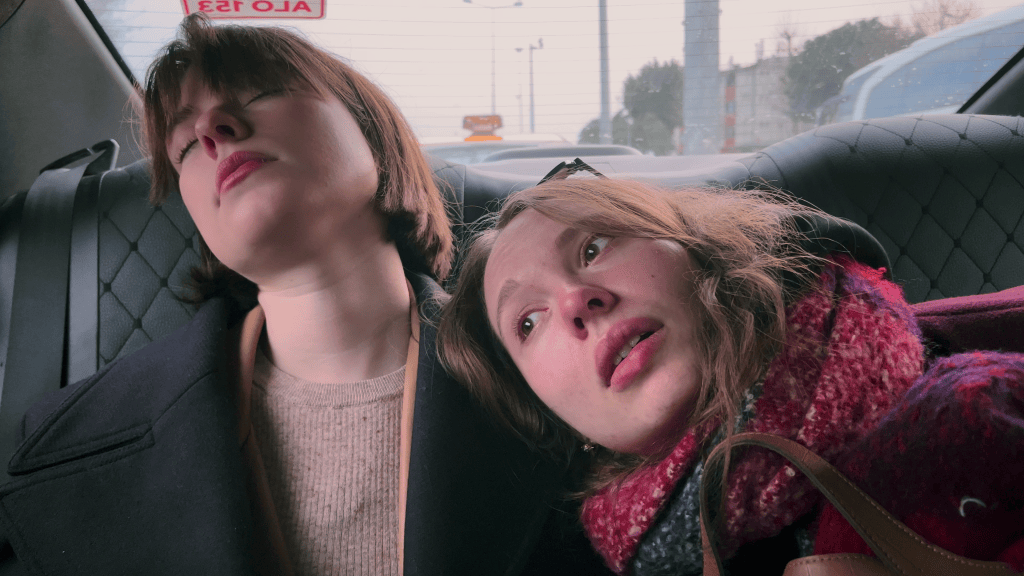
No shade on the many fiction films at this year’s New York Film Festival, but the most gripping entries of the 2026 edition are two documentaries that urgently address the current moment. The 2024 festival brought us My Undesirable Friends: Part I—Last Air in Moscow, a marathon 324-minute look into the lives of a group of young, independent Russian journalists, mostly female, striving to report the truth in a country dominated by state-run propaganda networks. That remarkable film ended with Russia’s invasion of Ukraine and the reporters given no choice but to flee the country virtually overnight. Now, director Julia Loktev presents the six-hour My Undesirable Friends: Part II—Exile, which follows her subjects (and some new additions) as they attempt to continue their work outside Russia. It’s just as compelling as the first film, and well worth your investment of time.
Incredibly, Loktev shot the entire film herself on an iPhone, this time traversing the globe, from Riga, Latvia and Tbilisi, Georgia to Istanbul, Tel Aviv, Vienna, Prague, Kyiv, Amsterdam, New York, and Washington. Thanks to that iPhone, what she captures is stunningly intimate, exploring both the professional challenges and personal lives of her brave, sardonic, endearing subjects. Chief among them (and credited as co-director) is the charismatic Anya Nemzer, who hosted two shows on Russia’s sole independent TV channel, TV RAIN. Anya took charge of shows at the reconstituted RAIN’s office in Georgia, then moved to New York to cofound the Russian Independent Media Archive, whose goal is to preserve Russian independent reporting from the past two decades.
Among the most striking stories is that of Lena Kostyuchenko, an out lesbian despite Russia’s draconian laws. Her partner, Yana, has cerebral palsy and talks about Russia’s shockingly benighted attitude toward people with disabilities. Lena filed eye-opening reports from Ukraine but left after being tipped off that she’d be killed if she tried to enter occupied Mariupol. Still a target, she was poisoned while living in Berlin and continues to cope with the aftereffects. Late in the film, Lena tells Julia, “I feel like I’m in some low-budget Hollywood spy movie. I hate this genre! Here I can’t turn if off, because it’s my fucking life.” One of the film’s most celebrated journalists, Lena wrote the bestseller I Love Russia: Reporting from a Lost Country and is filmed at a book-signing in New York. Yana is now her wife and the couple live in North Carolina.
Newcomers in Part II include an irresistible married couple, both journalists: Petya is Russian and a former RAIN reporter and Natalka is a Ukrainian who has been published in The Atlantic, The Guardian, TIME, Rolling Stone, and The New York Times. The couple were in Kyiv when the war broke out; Petya fled to Vienna and created the podcast “Fuck the War!” based on Natalka’s reporting. They later reunited in Ukraine, and Petya joined the Ukrainian army in the summer of 2024.
In contrast, there’s the sad story of Ksyusha Mironova, whose journalist fiancée, Ivan Safronov, was arrested on trumped-up charges of treason. Ksyusha bravely returns to Moscow for his trial, where she can only see him inside a courtroom cage. Ivan was sentenced to 22 years in a Siberian prison for sharing easily accessible information. The Kafkaesque absurdity of the Russian legal system is also evident in the case of former TV RAIN anchor Lera Ratnikova, who bemusedly listens in on her trial in absentia for spreading “fake news” about Russian war crimes—the sentence is 7.5 years in prison if she ever returns.
A crisis erupts at TV RAIN when one of their reporters expresses support for the beleaguered Russian troops, leading to the network’s expulsion from Latvia—the episode underlines the journalists’ tightrope act as Russians in exile trying to communicate the reality of the war to the people at home (and dealing with hostility from their host countries). The film also shows the devastating impact on these courageous rebels of the murder of opposition leader Alexei Navalny, and there’s a bone-chilling sequence filmed in Washington as MAGA supporters celebrate the re-election of Donald Trump. As in the first film, the cautionary lessons for the United States are all too clear.
NAZA
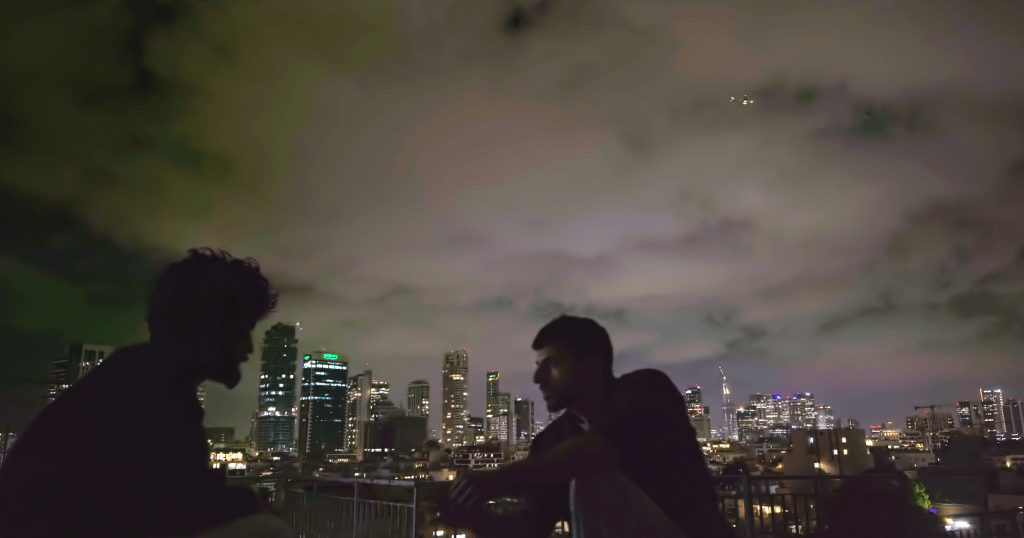
A late addition to the festival, direct from Venice where it won a Special Jury Prize, was NAZA, directed by Yuval Abraham and Rachel Szor, the Israeli half of the Oscar-winning quartet that made the powerful documentary No Other Land. (The other two were Palestinians Badel Adra and Hamdan Ballal.) NAZA is the military acronym for the Hebrew term for collateral damage, which many of the 24 Israeli soldiers and intelligence officers interviewed here accept not just as an inevitability but as something to be tallied with shocking indifference. These anonymous IDF members have had their faces and voices digitally altered and they’re photographed after dark on the rooftops of Tel Aviv. (The nighttime visuals of residents of Tel Aviv high-rises going about their business offer an eerie counterpoint to the carnage being described.) The interviewees speak matter-of-factly about acceptable quotas of innocent victims when targeting an alleged Hamas terrorist; one says he had permission to kill as many as 500 in the quest for one enemy. Often, the strikes would occur at night, when their Hamas targets were home with their families—in one instance, overhearing a child say “Daddy’s home” was the cue to strike.
The interviewees vary in their degrees of guilt. One calls himself “a small cog,” noting “someone else would have done it.” But another recalls a school trip to a concentration camp and says, “I still see those Nazis as evil, but what does that make me?” Without a doubt the October 7, 2023, Hamas attack on innocent Israelis was horrific, but there’s also no doubt that the Israeli response overseen by Prime Minister Bibi Netanyahu, viewing the entire population of Gaza as subhuman, has been wildly, criminally disproportionate.
The film itself has landed like an explosive in Israel, exposing an unconscionable wartime policy many in the country refuse to face. Netanyahu has called for Abraham and Szor to be stripped of their Israeli citizenship. Undaunted, the duo castigated the American audience at the New York Film Festival for their country’s complicity in Israel’s campaign of terror, death, and destruction. The filmmakers, with support from executive producer Jonathan Glazer of Oscar-winning Holocaust drama The Zone of Interest, will be self-distributing the doc in the U.S. Afterward, it will be available to stream on the website of U.K. newspaper The Guardian, also an executive producer.
At top, Ksyusha Mironova and Lera Ratnikova in My Undesirable Friends: Part II—Exile. Photos courtesy of Film at Lincoln Center.


Leave a comment