For those of us in NYC who don’t have the good fortune to travel the festival circuit (Cannes, Venice, Toronto, etc.), the New York Film Festival offers a welcome chance to catch up with many of the films that have been generating buzz from leading critics. The 64th New York Film Festival (Sept. 25-Oct. 12) is in fact showcasing most of the major award winners from last May’s Cannes (with the exception of Best Director winner La Bola Negra from Spain, which is the opening attraction at this year’s New Fest celebrating LGBT films).
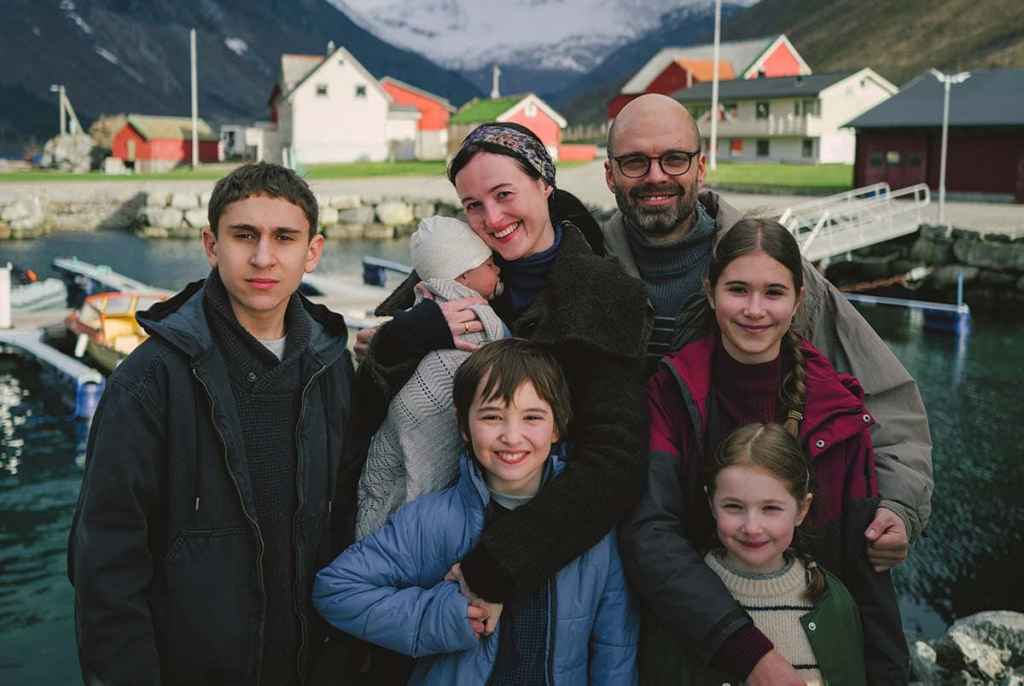
Pre-fest press screenings unveiled five honorees, including the winner of the top prize, the Palme d’Or, Cristi Mungiu’s Fjord. Mungiu previously won the Palme d’Or in 2007 for his searing abortion drama 4 Months, 3 Weeks and 2 Days, and his latest is equally gripping and provocative. The film centers on an evangelical couple, Romanian Mihai (Sebastian Stan, unrecognizable with glasses and a shaved head, and performing in his native language) and Norwegian Lisbet Gheorghius (Sentimental Value Oscar nominee Renate Reinsve), who have recently relocated to Lisbet’s native Norway with their five children. They seem to be settling into their quaint village quite well, but their strict religious regimen sets them apart from their broad-minded neighbors. When school officials notice bruises on their teenage daughter Elia (Vanessa Ceban), they’re all too inclined to rush to judgment. Very soon after, Mihai is being questioned by police and Lisbet by child-protective services and their kids are taken away, even the infant Lisbet is breast-feeding. The sudden dissolution of their family unit is chillingly Kafkaesque—and infuriating, as it’s clear Mihai and Lisbet love their children, however unorthodox their rules about no phones, internet or secular music may be. The religious right will likely embrace the film for its portrait of liberal overreach, but I think the Gheorghius family represents any “otherness” that arouses suspicion in a community. Mungiu’s reversal of our expectations will have any audience member questioning their assumptions. And the situation isn’t cut-and-dry: Mihai is a hothead and a domestic despot, and Elia’s longing for liberation is palpable. But do Mihai and Lisbet deserve to be treated like criminals on such flimsy evidence? Reinsve is especially heartbreaking here, confirming her status as one of the screen’s most gifted young actresses, and Stan continues to show his remarkable range outside the Marvel universe.
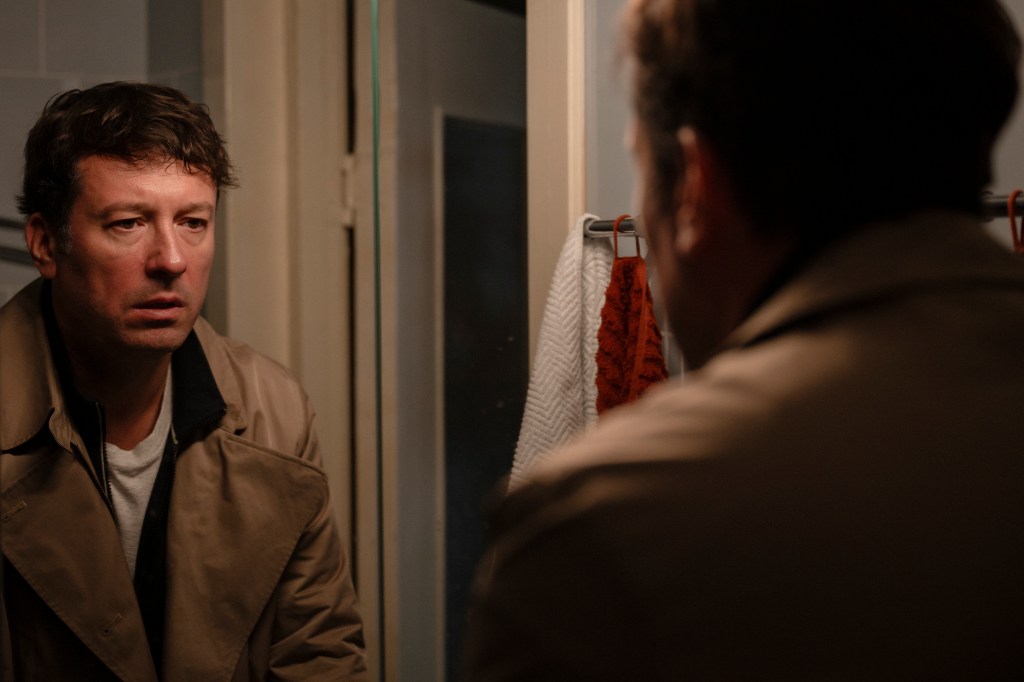
Dimitriy Mazurov in Minotaur
Winner of the Grand Prix (second prize) at Cannes, Minotaur is the first film made in exile by acclaimed Russian director Andrey Zvyagintsev (Loveless, Leviathan). Zvyagintsev contracted Covid in 2021 and was paralyzed for months; during his recovery in Germany, Russia invaded Ukraine and the director made the painful decision not to return home. A remake of Claude Chabrol’s La Femme Infidele, Minotaur stays true to that story of a man who discovers his weary wife is having an affair while slyly commenting on the corruption poisoning Russian society. Gleb (Dimitriy Mazurov) is a successful businessman whose life is in turmoil not just at home: The mayor of his unnamed city (actually Riga, capital of Latvia) is demanding that all top executives in the vicinity fill a quota of employees to be drafted for the “special military operation.” Gleb cynically resolves the problem by hiring a group of new employees for a bogus project and then adding them to the draft list. Meanwhile, Gleb tracks down the handsome photographer who’s sleeping with his wife; their meeting is comically awkward until it turns decidedly unfunny. Co-written with Simon Lyashenko, Minotaur shrewdly transposes Chabrol’s trademark clinical approach to the crime genre to a wider indictment of the amoral world Zvyagintsev has left behind.
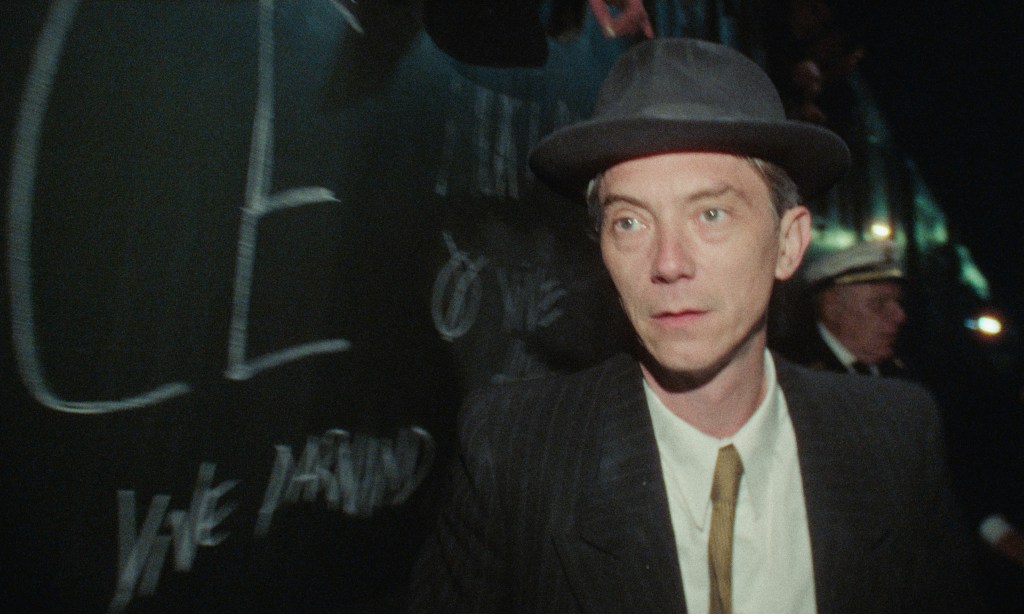
Swann Arlaud in A Man of His Time
Cannes gave its screenplay award to A Man of His Time, writer-director Emmanuel Marre’s drama set during the Vichy regime in France, inspired by the experiences of the filmmaker’s own great-grandfather. The director is quite merciless in his portrait of Henri Marre (Swann Arlaud), a nakedly ambitious social climber who fully embraces the collaborationist leadership of onetime World War I hero Philippe Petain of the southern Free Zone of France during the Nazi occupation of France. Henri feels that he never got the credit he deserved for a book he wrote about France’s future called Our Salvation, and he’s crushed when he’s bypassed for the position of labor minister, instead accepting a post as head of the unemployment agency. Though he’s essentially a low-level bureaucrat, his position ultimately requires his complicity (which he tries to deny to himself) in a program to deport Jews from France. The film is yet another illustration of the banality of evil, but this time within an environment of banal functionaries. Henri’s pathetic opportunism is contrasted with his elegant and formidable wife Paulette (Sandrine Blanke), at first introduced via voiceovers of her correspondence with Henri, who has left his family to fend for themselves while he pursues a career in the Free Zone. Unlike Henri, Paulette is a highly principled woman who gradually comes to understand the price of her husband’s quest for status. (She learns too late that their plush residence in Limoges was stolen from Jews.)
Arlaud, who played the family attorney in Anatomy of a Fall, is sensational in a self-effacing role, capturing Henri’s many flaws while making him all too recognizably human. Marre evokes the period well, but also makes the jarring choice to include anachronistic ’80s pop music in a few scenes. Perhaps it’s his message to contemporary audiences: This could be you too.
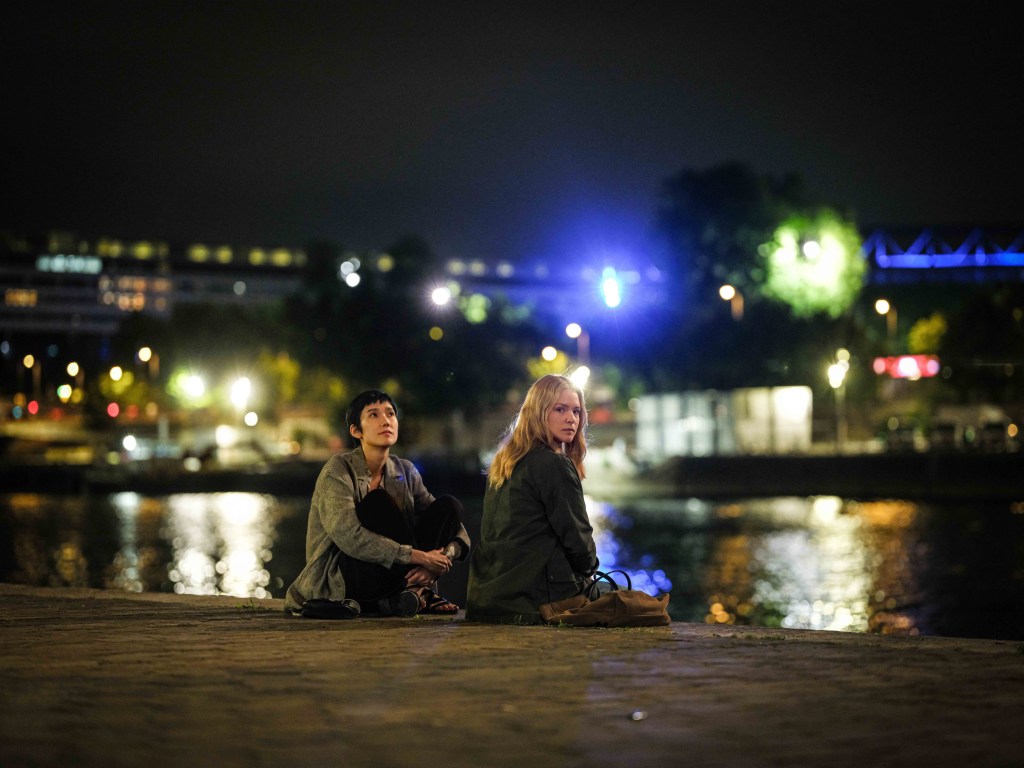
Tao Okamato and Virginie Efira in All of a Sudden
The Best Actress prize at Cannes was shared by Virginie Efira and Tao Okamato for their marathon bilingual performances in Ryusuke Hamaguchi’s All of a Sudden, the Japanese director’s first film set primarily in France. Efira plays Marie-Lou, the head of a Paris senior-care facility, where she’s instituted a real-life program called Humanitude, designed to provide more humane and attentive treatment of patients with dementia. Marie-Lou’s groundbreaking approach meets constant resistance from Sophie (Marie Bunel), a veteran nurse who views the program as impractical and burdensome on her staff. The narrative takes a completely new direction when Marie-Lou encounters a severely autistic young man (Kodai Kurosaki) and stays with him until his grateful father, Gorô (Kyozo Nagatsuka), arrives to retrieve him. Gorô is an avant-garde actor, and he and his director, Mari (Okamoto), invite Marie-Lou to see their latest theater piece, which happens to be about the treatment of mental illness. Marie-Lou is deeply moved, and in an after-talk she learns via an exchange in Japanese that the French audience isn’t privy to that Mari has terminal cancer. The two women bond during a long walk and a visit to Marie-Lou’s care facility and become instant friends.
Hamaguchi’s screenplay was inspired by correspondence between Makiko Miyano, a terminally ill philosopher, and Maho Isano, an anthropologist, about illness and mortality. Much of this 195-minute film consists of conversations between the two women, which will decidedly not be everyone’s cup of medicine. But their insights are profound and thought-provoking, and who knew a ten-minute whiteboard lecture about capitalism (by Mari) could be so captivating? The film benefits greatly from its authenticity, shot at a real-life care facility with patients and staff as extras. All of a Sudden requires great patience, but its moving portrait of people engaging the vulnerable with compassion will stay with you.
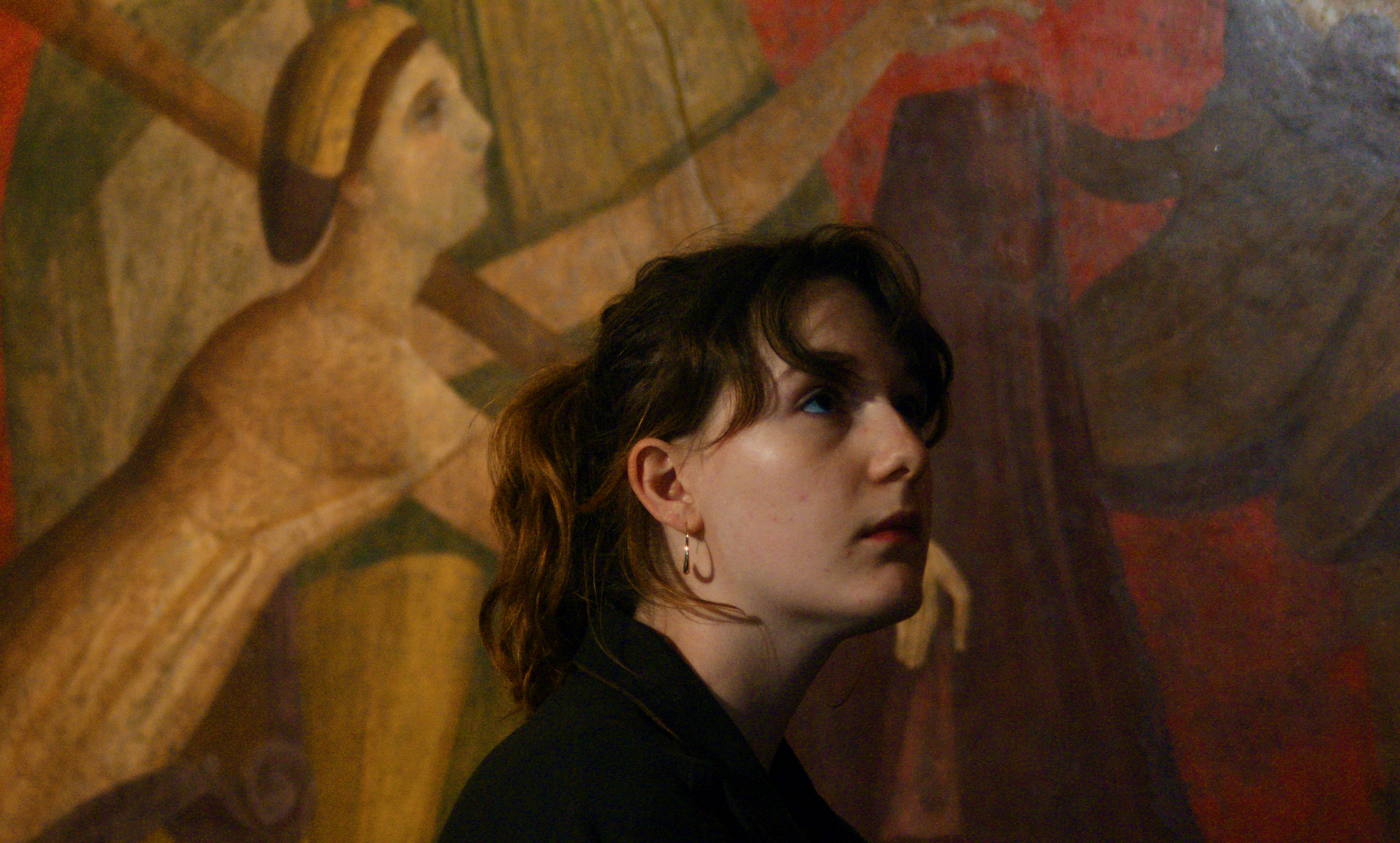
Antonia Buresi in La Gradiva
Running concurrent with the Cannes Film Festival is a program called Critics’ Week, a showcase of first or second features. The deserving winner of the Critics’ Week Grand Prize is La Gradiva, the remarkable first feature by cinematographer Marine Atlan. The title is Latin for “woman walking,” which refers to a bas-relief in Pompeii but could also apply to Madame Mercier (Antonia Buresi), the French schoolteacher in charge of and serving as guide to a group of high-school students on a class trip to Naples and Pompeii. Atlan and co-writer Anne Brouillet quickly establish the main characters we will follow. There’s Toni (Colas Quignard), a gay mischief-maker determined to explore his family roots and the legend of his grandmother, a Neapolitan chambermaid who became pregnant by a local aristocrat who subsequently died in an earthquake. Toni’s best friend is James (Mitia Cappelier-Audat), the class lothario who we first see hooking up with a female student on the train to Naples. James’s nemesis is Suzanne (Suzanne Gerin), a brilliant student who’s convinced she’s undesirable despite evidence to the contrary. The film unfolds with a deceptively casual naturalism, but tensions among this rowdy bunch are laid bare, leading to a shattering climax—all against the backdrop of Neapolitan color and those haunted ruins of Pompeii. The young actors here are a find, and Buresi is especially marvelous as their ardent but stressed-out guide. La Gradiva is one of the revelations of the New York Film Festival.
Pictured at top: Renate Reinsve, Sebastian Stan and family in Fjord. Photos courtesy of Film at Lincoln Center.


Leave a comment