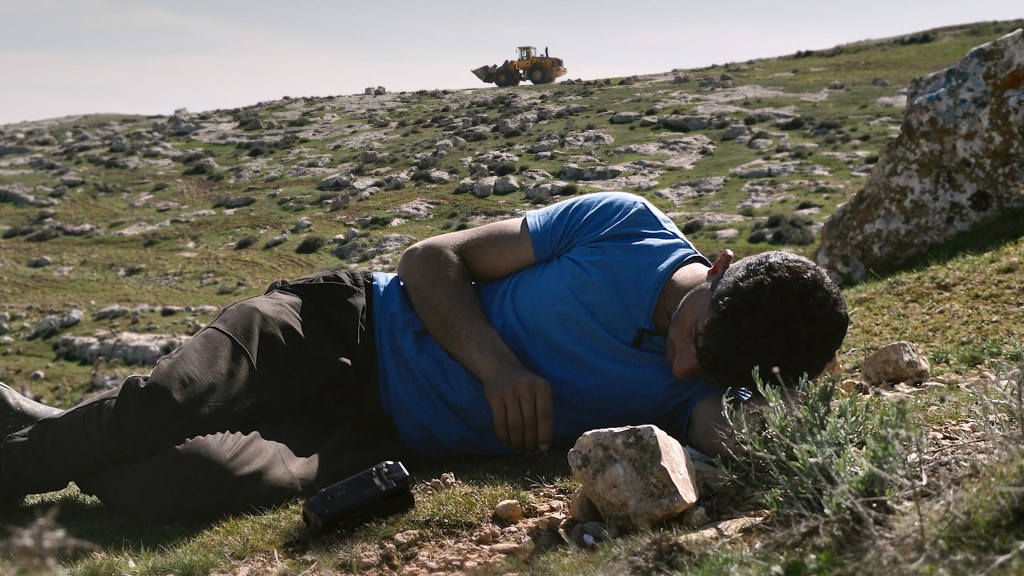
One of the most indelible and powerful films at the 62nd annual New York Film Festival is, in its very existence, an act of bravery. No Other Land, written, directed, produced, and edited by Palestinians Basel Adra and Hamdan Ballal and Israelis Yuval Abraham and Rachel Szor, is the story of the Palestinian farming region known as Masafer Yatta, and Israel’s decades-long program to raze the homes established there under the pretext of creating a military training zone. The main on-camera subject is Basel Adra, the son of activists, who’s known no other life but activism since his childhood. In 2019, Adra teamed up with fellow journalist Abraham to record the Israeli bulldozing of houses in his neighborhood, a particularly cruel form of eviction. The people of Masafer Yatta are frequently startled by the allyship of Israeli Abraham, who sometimes becomes a target of their frustration. Over the four-year time frame of the film, Adra and Abraham become close friends, always cognizant of their differing statuses as a virtual prisoner and a citizen free to come and go. The film deftly alternates between scenes of the Israeli army’s destruction of homes (even a school!) as Adra bravely confronts soldiers, camera in hand, and conversations between the Palestinian and the Israeli. (“Can we get married?” Adra asks during one of these intimate sessions, but the meaning here is “Can we ever lead normal lives?”) Abraham expresses frustration that their journalistic posts aren’t getting enough traction; the more seasoned and pragmatic Adra cautions that change takes time—years and years of time.
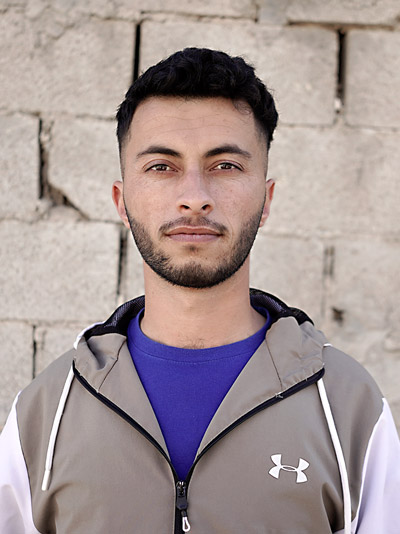
Basel Adra
The filmmakers also focus on the family of Harun Abu Aram, who is shot and paralyzed as he tries to prevent soldiers from removing generators. It breaks your heart when his despondent mother describes how she and her stricken son have been forced to live in a dusty cave—like many others in the community—since their home was destroyed. (Abu Aram later died, and Adra’s own cousin was killed by soldiers toward the end of filming.) Notably, the film also captures the indomitable spirit of the region’s children, who never lose their ability to laugh and play.
Somehow, Adra still holds out hope for a better world, dumfounded by the fact that the Israelis “once suffered like us.” This vital eyewitness account won top documentary honors at the Berlin Film Festival and deserves a worldwide audience.
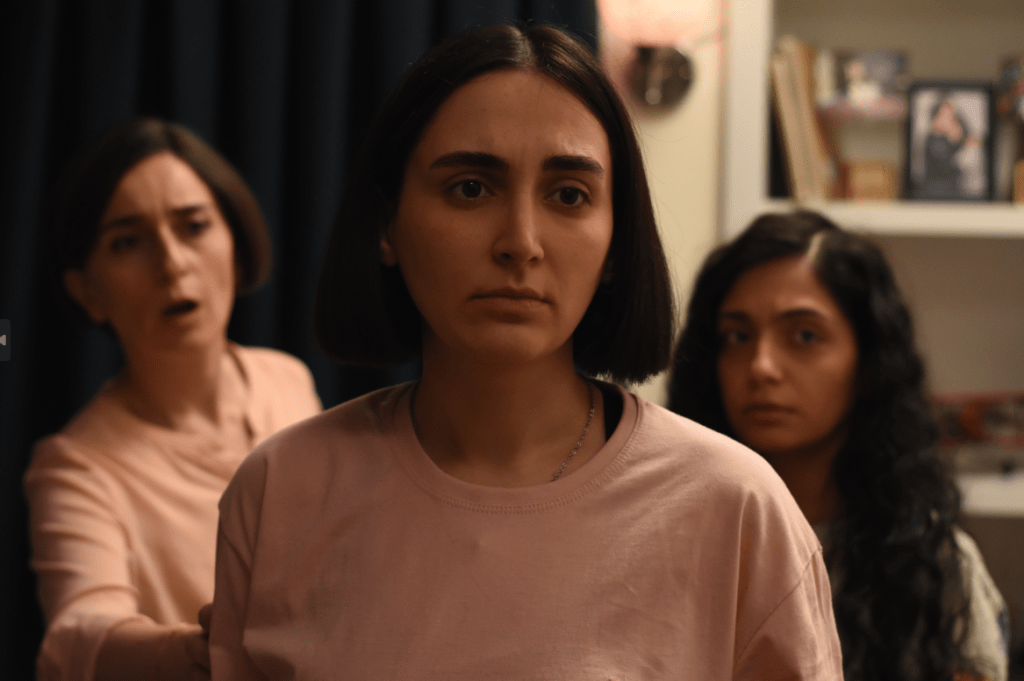
Soheila Golestani, Mahsa Rostami, and Setareh Maleki in The Seed of the Sacred Fig
Another striking example of bravery at the New York Film Festival is The Seed of the Sacred Fig, winner of a Special Jury Prize at Cannes. Writer-director Mohammad Rasoulof’s remarkably audacious drama depicts the gradual unraveling of a family in Tehran after patriarch Iman (Missagh Zagreb) is promoted to the powerful position of investigating judge. It’s quickly made clear to Iman that he is not to weigh evidence carefully but simply sign off on death warrants. Iman initially resists, but not for long. Iman’s new responsibilities coincide with a seismic moment in recent Iranian history: the suspicious death of young Kurdish woman Mahsa Amini while in police custody, which led to massive protests. Iman’s two daughters, Rezvan (Mahsa Rostami) and Sana (Setareh Maleki), get swept up in campus turmoil and bring home a friend who’s been struck in the face with buckshot. (The scene of the removal of the pellets is quite graphic.) Soon, the girls begin to openly rebel against their stern father, and even their cautious mother (an excellent Soheila Golestani) starts to evolve. When Iman’s gun goes missing, he descends into paranoia and an increasingly dark battle of wills with his family.
Rasoulof was imprisoned along with fellow director Jafar Panahi in 2022 for signing a petition urging more official restraint during public protests. Following his release in early 2023, he began filming Sacred Fig secretly, and learned during the shoot that he had been sentenced to eight years in prison for his outspokenness. The drawn-out appeals process enabled him to finish the film, and he fled Iran for Germany once he learned his appeal has failed.
Rasoulof includes within his movie actual cellphone footage of the 2022 protests and incidents of police brutality, an unnerving accompaniment to the fictional tale he’s telling. A coda pays tribute to all those brave protestors willing to show their faces and risk imprisonment or even death. Rasoulof himself has paid a huge price for his candor. May he prosper in the West.
Pictured above: A scene from No Other Land. Photo courtesy of Antipode Films.

 Kevin Lally on Film
Leave a reply to More Highlights from the 62nd New York Film Festival – Kevin Lally on Film Cancel reply