The Tribeca Festival, launched after the September 11 attack by Robert De Niro and Jane Rosenthal to revitalize the neighborhood, continues to thrive in its 23rd year. With 114 feature films screening from June 5-16, it’s impossible to catch everything, but I’ve had relatively good luck with the selections I’ve chosen so far.
The festival always has a strong representation of documentaries, many of which focus on celebrities and music stars, allowing it the opportunity to host glitzy premiere events. Post-screening events this year include performances by several musical doc subjects, including folk singer-songwriter Ani DiFranco, rock singer-producer Linda Perry, and Hamilton Tony Award winner Renée Elise Goldsberry with her Broadway pals Sara Bareilles, Leslie Odom Jr., Kelli O’Hara, and Ariana DeBose.
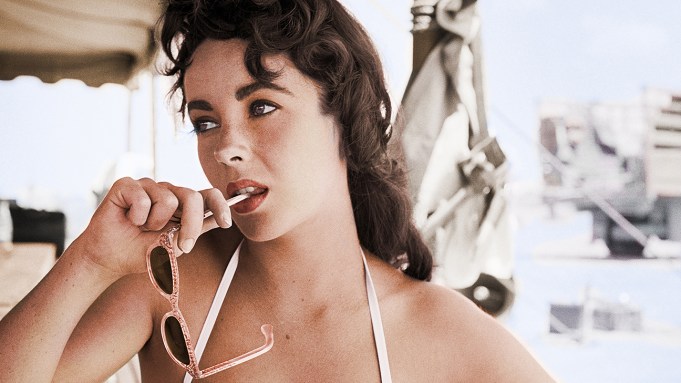
Arguably the most glamorous of the fest’s doc subjects is no longer with us, but she still provides an intimate portrait in Elizabeth Taylor: The Lost Tapes. Doc veteran Nanette Burstein (The Kid Stays in the Picture) selects from 40 hours of audiotapes Taylor recorded for a memoir in the 1960s, combining them with a lively assemblage of on-screen and off-screen film clips. We are again reminded what a strikingly beautiful child star Taylor was, and how quickly she was ushered into more mature roles, playing opposite the 37-year-old Robert Taylor as his bride at age 16. “My [first] film kiss was better than my [first] real-life kiss,” she said, noting that the two happened almost simultaneously.
The film chronicles Taylor’s many marriages: to the abusive Nicky Hilton, to the much older actor Michael Wilding, whom she feels she treated unfairly, and then one of the two loves of her life, the flamboyant producer Mike Todd, who perished in a plane crash. Taylor was crushed by that tragedy and found comfort in the arms of Todd’s close friend Eddie Fisher, who inconveniently was married to another ’50s star, Debbie Reynolds. But in a turnabout made for the tabloids, Taylor left her then-husband Fisher when she fell hard for her Cleopatra co-star, Richard Burton.
Taylor candidly discusses her insecurities about her transition from child star, how let down she was by mediocre assignments after her dramatic breakthrough in A Place in the Sun, how making Cat on a Hot Tin Roof helped her cope with the loss of Mike Todd, and her distaste over being turned into “a public utility.” She famously hated the film that won her the Oscar, Butterfield 8 (“a piece of shit”), and joked that it was her tracheotomy during a near-fatal bout of pneumonia, not her performance, that clinched the trophy. The key to her second Oscar for Who’s Afraid of Virginia Woolf?, she said, was that she “had Martha to hide behind”—a frowsy character role.
The film fills in the later years of Taylor’s career—including her AIDS activism after the death of her good friend Rock Hudson—with audiotapes from an interview conducted by journalist Dominick Dunne. The Lost Tapes debuts in August on HBO, and should interest a new generation in the headline-making life of this one-of-a-kind star.
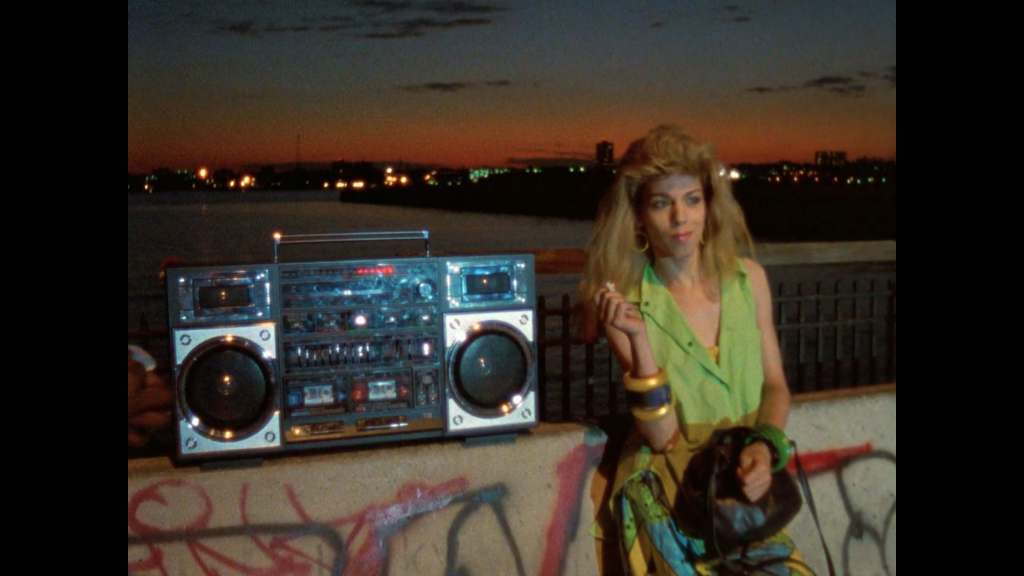
A very different star is featured in Kimberly Reed’s doc I’m Your Venus. She only appeared in one film, but that film was the groundbreaking and influential Paris Is Burning, Jennie Livingston’s 1991 account of New York City’s underground trans and queer Ballroom culture, with its outrageous voguing competitions. One of the standouts of that film was the compelling Venus Xtravaganza of the “House of Xtravaganza,” who was murdered before the production was completed.
Decades later, Reed meets with Venus’s Jersey City family, her manly brothers John, Joe, and Louis Pellagatti, and niece Jillian. Admitting they were not fully supportive of their trans sister back in the day, today the brothers are remarkably respectful, always referring to Venus as their sister and never using her birth name. They are also still outraged by their sister’s murder and how little effort the police put into finding the killer. The brothers agree to team up with the still-thriving House of Xtravanganza and its elegant leader, Gisele, to reopen the cold case. Also on their agenda: a posthumous legal name change for Venus, a new tombstone, and having Venus’s Jersey City home declared a historic landmark in light of her Paris Is Burning legacy.
Livingston is an executive producer on the new film, which includes many vibrant clips from Paris Is Burning as well as outtakes. But it’s the new footage showing the unexpected alliance of the Pellagattis and the Xtravaganzas that really touches the heart.

Martin Scorsese has made documentaries offering his personal perspective on American and Italian cinema, and it seemed inevitable that he would get around to yet another extended movie lecture about two of his long-professed cinema idols: Michael Powell and Emeric Pressburger. Directed by David Hinton, Made in England: The Films of Powell and Pressburger is a comprehensive, film-by-film account of a partnership that produced some of Britain’s most stylistically daring motion pictures, with Brit Powell the primary director and Hungary-born Pressburger the primary writer. Working under the banner The Archers, they created such unique classics as The Life and Death of Colonel Blimp, I Know Where I’m Going!, A Matter of Life and Death (aka Stairway to Heaven), Black Narcissus, The Red Shoes, and Tales of Hoffmann. Scorsese talks about his deep personal connection to these films, beginning with viewings on a black-and-white TV during the “Million Dollar Movie” days. Clips later illustrate how, for instance, The Red Shoes’ ballet sequence influenced Scorsese’s choreography of the boxing sequences in Raging Bull.
This deep dive, which also features charming joint interview footage of the duo, entices you to check out some of their lesser-known films like A Canterbury Tale and The Small Back Room. And, like any chronicle of filmmaking careers, there are low points too, such as the pair’s clashes with high-powered producers David O. Selznick and Alexander Korda, respectively, on Gone to Earth and The Elusive Pimpernel. The lowest came after Powell struck out on his own and made the shockingly subversive Peeping Tom, so savaged by critics it virtually ended his career (though it’s highly regarded today). When the young Scorsese first tracked down Powell, the once-formidable director was living in near-poverty. Scorsese not only helped revive his reputation, he introduced Powell to his editor Thelma Schoonmaker, who became Powell’s devoted wife. This lovely tribute is yet another gift from Scorsese to his idol.


 Kevin Lally on Film
Leave a reply to James Seraphine Cancel reply