The 63rd New York Film Festival concludes on Monday, October 13, 2025. I managed to see 31 features—some were disappointing, a few I actively hated, but the majority were well worth the trip from Brooklyn to Lincoln Center. Here are four favorites.
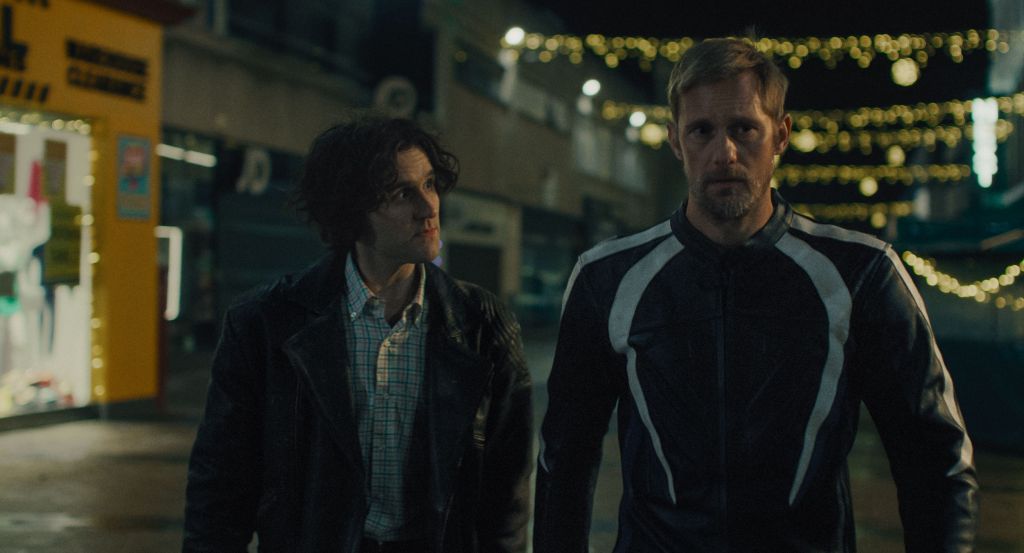
The most delightful (yet very naughty) surprise was Pillion, just your average comedy-romance about a gay sadomasochistic relationship. Colin (Harry Melling) is an unprepossessing young parking-violations officer who sings in a barbershop quartet and falls under the spell of Ray (Alexander Skarsgård), a tall, gorgeous biker in leather he meets at the local pub. Ray is as taciturn as Colin is eager—eager to submit to whatever Ray demands of him, both sexually and as an unofficial houseboy. Melling, who made his film debut at age ten in the first Harry Potter film, has a jagged face and wide eyes that make an amusing contrast with Swedish Adonis Skarsgård as both actors commit to their borderline X-rated workouts. Adding to the fun are Colin’s parents (Lesley Sharp and Douglas Hodge), fully accepting of, even cheering on their son’s sexuality until they meet his hardcore new daddy. Initially, the wildly disparate personalities of this curious couple generate outrageous laughs, but the film becomes increasingly poignant as Colin begins to assert himself and express his desire for a deeper connection. Ray remains a mysterious, emotionally closed-off figure, and Skarsgård masterfully conveys his glimmers of vulnerability and fear of true intimacy. Matching his skill is Melling, in a bravely self-effacing performance that subtly reveals Colin’s budding autonomy. It’s an auspicious and nervy feature directing debut for Harry Lighton, who adapted the screenplay from Adam Mars-Jones’s novel Box Hill. (In case you were wondering, a pillion is the back seat of a motorcycle—and British slang for “bottom.”) This deep dive into a transgressive subculture won’t be for everyone, but adventurous moviegoers will enjoy their walk on the wild side.

Will Arnett in Is This Thing On?
A more conventional but no less fractious couple is at the center of Is This Thing On?, Bradley Cooper’s engaging third outing as a feature director. Cooper’s longtime friend Will Arnett plays Alex Novak, who after 20 years of marriage agrees with his wife Tess (Laura Dern) that it’s time to separate. High on a hash-laced cookie, Alex impulsively signs himself up on open-mic night at the West Village’s Comedy Cellar rather than pay the $15 cover charge. Alex vents onstage about his breakup and scores some laughs, the beginning of a recurring side gig, standup as therapy. The script by Cooper, Arnett and Mark Chappell was inspired by the real-life experience of British comedian John Bishop.
A high point of the film strains credibility but is also based on a real event, as Tess and her date (football star Peyton Manning) turn up at the comedy club by sheer coincidence and witness Alex’s monologue about a recent one-night stand, in which he confesses how it made him miss sex with his wife. Tess is stunned, both by Alex’s new career and his exposure of their personal lives, but she’s also kind of turned on. And thus a new chapter of their turbulent relationship begins.
As a veteran actor, Cooper is extremely skilled at getting naturalistic performances out of his entire cast: The scenes at family gatherings, dinners with friends, and between the real-life performers at the comedy club feel as if there were no crew behind the cameras. Arnett, co-host of the “Smartless” podcast and the voice of Lego Batman, Bojack Horseman, and commercials for GMC, is sensational in his first lead role, a man who’s hurting from the collapse of his marriage and struggling to understand why it failed. Dern is his equal as Tess, a onetime volleyball star who’s never overcome her bitterness over the sacrifices she made for her marriage. There are no villains in the film, just two people who’ve been unable to communicate their buried frustrations. The terrific ensemble cast also includes Cooper himself as Alex’s flaky best friend “Balls,” Andra Day as Balls’s formidable wife Christine, and Ciarán Hinds as Alex’s gentle father and Christine Ebersole as his plain-spoken mother, who insists on maintaining her bond with Tess. In smaller roles are Arnett’s “Smartless” colleague Sean Hayes and his real-life husband, Scott Icenogle. Special mention must go to Blake Kane and Calvin Knegton as Alex and Tess’s young sons, as natural as can be.
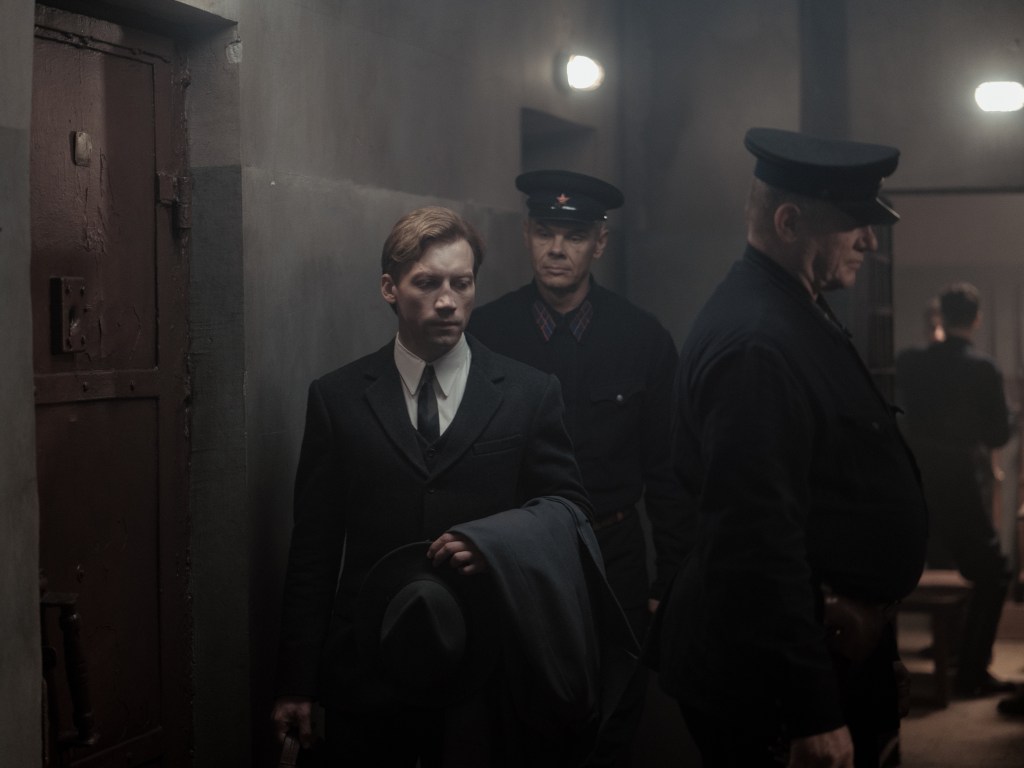
Alexander Kuznetsov in Two Prosecutors
One of the best films at this year’s festival was also one of its grimmest. Based on a book by former political prisoner Georgy Demidov, Two Prosecutors is set in 1937 in Stalinist Russia, and the portrait it paints of that era is chilling. The early scenes of Ukrainian director Sergei Loznitsa’s film focus on an elderly, unnamed prisoner (Ivgeny Terletsky) who’s given the assignment of burning his fellow inmates’ letters in a tiny stove. But in a bold act of rebellion, he saves one letter—written in blood—decrying an injustice and manages to transmit it to the office of young prosecutor Kornev (Alexander Kuznetsov). Kornev visits the prison, where he’s clearly not a welcome guest but manages to interview the letter’s author, Stepniak (Aleksandr Filippenko), a onetime revolutionary who shows him his scars from brutal torture. The idealistic Kornev believes he has the evidence to expose a plot to suppress and eliminate true patriots, and he takes it to the office of the nation’s top prosecutor. After an interminable wait, he’s given an audience and an apparent green light to proceed. But Loznitsa’s oppressive mise-en-scène generates a feeling of dread that Kornev’s noble mission will not end well—a feeling borne out in the film’s sucker-punch closing minutes.
Two Prosecutors is a demanding watch, but it sure feels like an accurate depiction of a Kafkaesque time and place that has eerie resonance for the political nightmare overtaking so much of the world today. And that includes a USA that has become unrecognizable with each passing day.
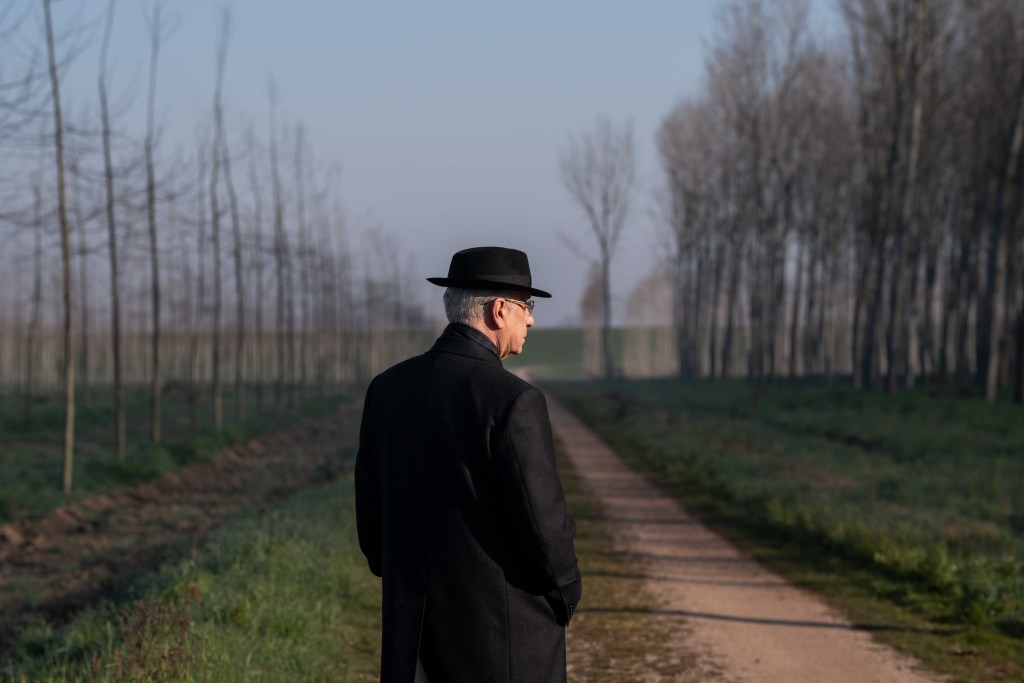
Toni Servillo in La Grazia
La Grazia (Grace), the new film from Oscar-winning Italian director Paolo Sorrentino, could have been called Two Jurists. The chief conflict is between Mariano De Santis (Toni Servillo), former judge and president of the Italian Republic, and his brilliant lawyer daughter, Dorotea (Anna Ferzetti). Mariano is approaching the end of his term and is facing two major decisions: whether to endorse a law decriminalizing euthanasia, against the wishes of his friend, the Pope (Rufin Doh Zeyenouin), and whether to issue pardons in two notorious murder cases. Mariano, a devout Catholic, is struggling with both questions, while his daughter is urging him to say yes.
This portrait of a fictional president is anything but straightforward, no surprise when you’re talking about a Sorrentino film. Heavily influenced by Federico Fellini, Sorrentino is a bold stylist, immersing you in Mariano’s world in an impressionistic series of sometime surreal episodes. A memorable sequence has Mariano welcoming the aged president of Portugal, who’s suddenly assailed by a freak wind and sleet-storm and felled by the billowing red carpet. “Am I that old?” Mariano asks his aide-de-camp. Another has Mariano watching the silent live feed of an astronaut floating in his capsule and tracking the single tear that escapes from his eye.
Mariano is nicknamed “Reinforced Concrete” for his solid, sober reputation, but he’s never gotten over the death of his beloved wife Aurora eight years earlier, or the fact that he’s never been able to learn the identity of her illicit lover. The only person who knows is his flamboyant friend, art critic Coco Valori (the wonderful Milvia Marigliano, who steals every one of her scenes). La Grazia also makes compelling visits to the two prisoners being considered for pardons: Isa Rocca (Linda Messerklinger), a defiant woman convicted of stabbing her abusive husband while he was asleep, and Cristiano Arpa (Vasco Mirandola), a popular history teacher who killed his Alzheimer’s-afflicted wife.
Anchoring the film is the remarkable Toni Servillo, the star of Sorrentino’s earlier successes Il Divo and The Great Beauty. Mariano is an unshowy, contemplative role, but you can’t take your eyes off this exemplary actor. In Il Divo, he was utterly convincing as corrupt Italian politician Giulio Andreotti; here, he’s just as convincing as a decent, thoughtful leader. And, boy, do we need that kind of role model now.
Pictured at top: Harry Melling and Alexander Skarsgård in Pillion. Photos courtesy of Film at Lincoln Center.
 Kevin Lally on Film
Leave a comment