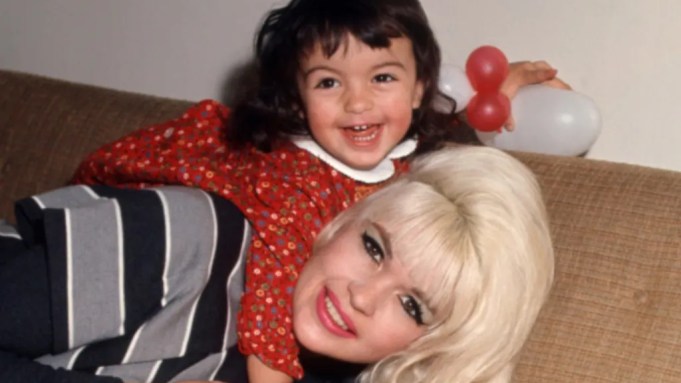
Mariska Hargitay has had a remarkable TV run as the Emmy-winning star of “Law & Order: Special Victims Unit” over a record-breaking 26 seasons. Many of the show’s younger fans may not know that she’s the daughter of a movie icon, the buxom 1950s sex symbol Jayne Mansfield. Hargitay was only three years old when her mother was killed in a dreadful car accident in 1967; Mariska and two of her siblings were asleep in the back seat.
Hargitay has no vivid memories of her mother, and for years she was repelled by her mom’s “dumb blonde” persona—an act designed to garner publicity, since she was fluent in several languages and a gifted violinist and pianist. My Mom Jayne is Hargitay’s very personal effort to get to know the real Jayne Mansfield, an effort that leads to some fascinating family revelations.
Hargitay interviews her stepsister by Mansfield’s first husband, Jayne Marie; her older brothers Mickey Jr. and Zoltan; her lovely stepmother, Ellen, and the star’s 100-year-old publicity agent, Rusty Strait, who wrote a tell-all book Mansfield’s bodybuilder husband Mickey did not welcome. That book revealed a secret Mariska tried to suppress for three decades: that her beloved father Mickey was not her real dad. In fact, Mariska was the result of a rather open affair Jayne had with Italian singer Nelson Sardelli while still married to Mickey. Even as a very young child, Mariska had always felt a certain distance from her mother and the other members of her family, and here was the explanation.
The film moves on several tracks, first functioning as a revisionist biography of Mansfield, who embraced her sex goddess image as a means to an end but came to regret the limits it placed on her aspiration to be taken seriously as an actress. (A clip from the drama The Wayward Bus alongside fellow contract player Joan Collins reveals that lost potential.) It’s also a portrait of an extended family formed by the complex ebb and flow of romantic relationships. Nelson Sardelli, full of regrets, appears late in the film, justifying his absence from his daughter’s life as the only way to preserve the bond Mariska had forged with Mickey and her brothers after her mom’s death. A brief clip showing Mickey sobbing when Mariska won a Golden Globe says it all. Also moving and joyful is Mariska’s meeting with Nelson’s two other daughters, another part of the family she got to know late in life. Premiering on HBO Max on June 27, My Mom Jayne is a rewarding personal journey for both Hargitay and her many fans.
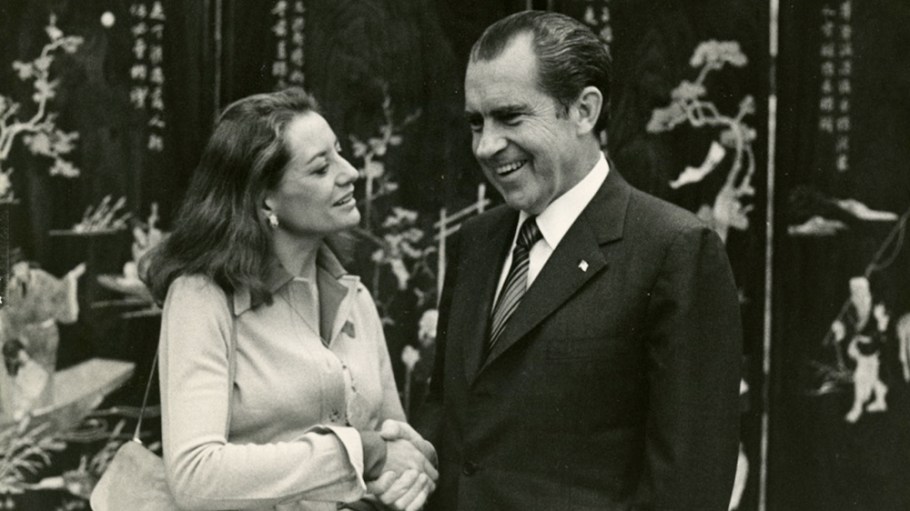
Barbara Walters and Richard Nixon
Another notable and complicated life is explored in the Hulu doc Barbara Walters: Tell Me Everything, Jackie Jesko’s portrait of the groundbreaking celebrity interviewer who became a major celebrity herself. As the parade of female TV journalists who paid tribute to her on her final day at her talk show “The View” attests, Walters elevated the role of women in morning television. Initially assigned “women’s stories” when she joined “The Today Show” in 1961, she established a “workaround” by doing interviews outside the studio format. When host Frank McGee died of cancer in 1974, her contract stipulated that she be named co-host “over McGee’s dead body,” in the sardonic words of Katie Couric. In 1976, she was named the first female co-anchor of a network evening news program, much to the annoyance of her “ABC Evening News” partner, Harry Reasoner. Their chemistry was nil, but Roone Arledge, the ABC Sports wunderkind who had taken over the news division, was a fan and launched Walters’s long-running series of interview specials.
Walters’s father Lou was a showbiz impresario who owned the Latin Quarter chain of nightclubs, and his daughter grew up unfazed by celebrities. Thus, she was unafraid to ask blunt questions no one else would dare pose. And, as a woman, she could charm an Anwar Sadat in a way her rival Walter Cronkite never could.
In a revealing archival moment, Walters says she’s especially attracted to powerful men—even morally dubious ones like Fidel Castro. That may explain her unforgivable friendship with Roy Cohn, the notoriously ruthless lawyer and mentor to Donald Trump. (Cohn also extricated Lou Walters from financial ruin.) As Peter Gethers, editor of Walters’s autobiography, observes, “She did not have the strongest moral compass.” Walters was also fiercely competitive, never more so than when journalist Diane Sawyer joined ABC. Always insecure about her looks, Walters viewed her network rival as “a blonde goddess” who must be defeated in the contest for the biggest interviews.
Without a doubt, Walters paved the way for the women who followed. But her other legacy is a mixed bag. Throughout her career, pundits complained that her embrace of celebrity interviews was lowering journalistic standards, forgetting that Edward R. Murrow was there first. Today, thanks to pioneers like Walters, news and entertainment are inextricably linked. And that’s the way it is, Mr. Cronkite, like it or not.

“Rev” Collins in Natchez
The Tribeca Festival has both competitive and non-competitive sections, and the very worthy winner of the competition for Best Documentary Feature is Natchez. Suzannah Herbert’s film is an eye-opening portrait of the Mississippi city where a huge part of the economy is derived from tours of Antebellum mansions. Herbert follows guides both white and Black, and the contrast between their approaches is unsurprisingly stark. David Garner is a gay, elderly man with Parkinson’s disease who presides over his ornate family mansion, Choctaw Hall. The much younger Tracy McCartney conducts her tours in a vintage gown and hoop skirt and has made her very presence a tourist attraction. Then there’s Tracy “Rev” Collins, the pastor of a Black Baptist church whose van proclaims, “See the REAL Mississippi.” As he tells his white customers, “I’m about to violate some Southern pride narratives with some truths and facts.” One of Rev’s stops is Forks of the Road, the site of one of the South’s largest slave markets; unfortunately, the white owner of the gas station across the street refuses to sell his property to make room for an expanded historical attraction and just wishes everyone would forget the past.
After a boll weevil outbreak in the 1930s decimated Natchez’s cotton-driven economy, the women of the local Garden Club opened up their homes to visitors, and thus the “Pilgrimages” to Natchez were born. Debbie Cosey is the only black member of the Garden Club—she lives in former slave quarters, and her tour offers an alternative perspective from the white owners who swear that their ancestors were “good to their people.” There’s a lot of subtle racism coursing through the film, but Herbert saves a wallop for the end when Garner, who has seemed disarmingly eccentric, goes on a racist rant recalling the time Hillary Clinton wanted to rename Confederate Avenue. The patience of people like Rev Collins and Debbie Cosey is a wonder to behold.
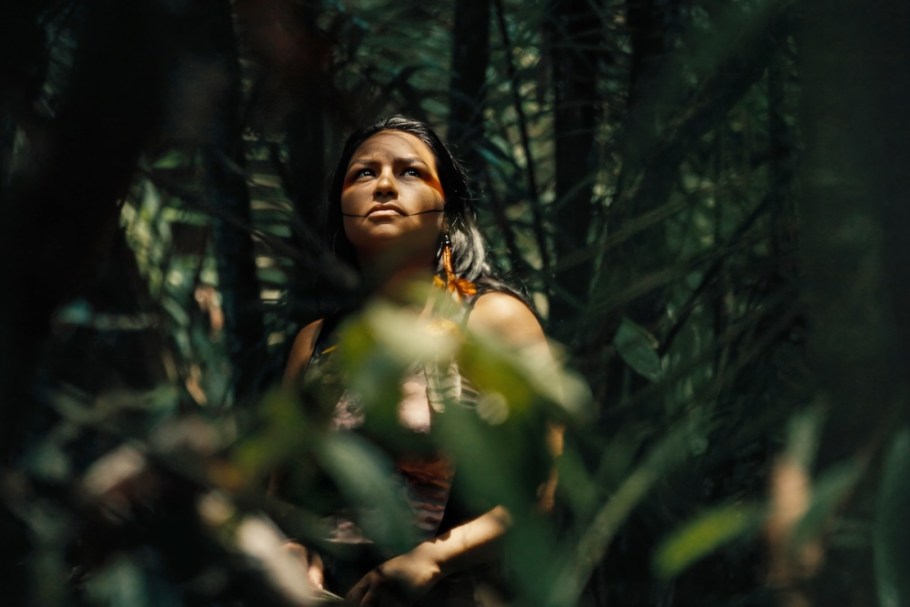
Juma Xiapaia in Yanuni
The current political climate in the United States is distressing, but consider what Juma Xiapaia is up against. The first woman elected chief of Brazil’s Middle Xingu region, she’s been a fighter for Indigenous people and an environmental activist since her teenage years, surviving six assassination attempts. Under the corrupt leadership of President Jair Bolsonaro, illegal miners polluted the rivers of her Amazon homeland and caused innumerable deaths. When Bolsonaro was defeated by Luiz Inácio Lula da Silva in the 2022 election, Juma became part of the government, as the first Secretary of Indigenous Rights. Her husband Hugo is also a leading activist, part of dangerous missions by Brazil’s environmental protection agency to destroy illegal mining operations.
What you may not expect from Yanuni, Austrian director Richard Ladkani’s documentary portrait of Juma and Hugo, is how beautiful it is. Juma is truly one with nature, always yearning to return to the forest while she toils for the government in the city. Even a visit to New York City casts no spell for her, as she wonders whether the people in those sterile boxes can relate to what her people are suffering. Ladkani’s gorgeous cinematography reflects its subject’s sensibility, evoking the magic of her world and forcing you to see past her exotic headdress and face paint. Yanuni was the closing-night film at the Tribeca Festival, no doubt in part because one of its producers is eco-activist Leonardo DiCaprio. But the film deserved that showcase on its own merits.
Some other highlights from the 2025 Tribeca Festival: Nobu, a fascinating look at Nobu Matsuhisa, the innovative chef who combined Japanese cuisine with Peruvian ingredients and created a restaurant and hotel empire; Sun Ra: Do the Impossible, a PBS “American Masters” portrait of the iconoclastic jazz pianist/composer/bandleader and Space Age philosopher; Dear Ms.: A Revolution in Print, a history of Gloria Steinem and partners’ bold gamble on a feminist magazine and its seismic cultural influence; and Tow, an engaging, fact-based drama starring Rose Byrne as a former addict fighting the system when the 1991 Toyota Corolla she calls home is stolen and then held hostage by a towing company.
Pictured at top: Jayne Mansfield with a three-year-old Mariska Hargitay.
 Kevin Lally on Film
Leave a comment