

Delaware is known as “the First State” for its historic legacy as the first state to ratify the United States Constitution. Delawarean Sarah McBride has herself tallied some impressive firsts: the first openly transgender woman to work at the White House; the first trans speaker at the Democratic National Convention, in 2016; the first trans member of the Delaware State Senate, making her the highest-ranking trans elected official in America. Director Chase Joynt’s State of Firsts follows McBride as she seeks to chalk up another huge first: to become the first openly transgender member of Congress.
It quickly becomes clear that McBride is a very, very skilled politician, whose interest in politics took root in childhood. She’s a natural people person, traversing the state and persuading voters that her priorities are kitchen-table issues like paid family and medical leave and better healthcare. Remarkably, in the Democratic primary she earns 80 percent of the vote in a three-way race. And she wins that Congressional seat in a 2024 election stained by the Republicans’ anti-trans messaging.
That’s when things truly get ugly. Republican Congresswoman Nancy Mace makes a hateful spectacle of herself attacking McBride and insisting she be banned from the women’s bathrooms at the Capitol. Craven Speaker Mike Johnson agrees to the ban. McBride refuses to counterpunch, believing there are much more important issues to fight about. To her dismay, some of her LGBT followers express disappointment with her strategic graciousness.
The film includes a memorable example of the abuse McBride puts up with and handles so well, when Texas Republican Keith Self introduces her as “Mr. McBride” at a subcommittee hearing. “Thank you, Madam Chair,” she cheekily responds. McBride certainly doesn’t need protectors, but it’s still gratifying to watch Massachusetts Democrat Bill Keating scold Self about his misgendering, telling him, “This is not decent.” Rather than relent or apologize, Self adjourns the meeting.
Whatever anger McBride may feel, it never surfaces in this intimate documentary portrait. She’s in Washington to do a job, and I suspect she’s there to stay.
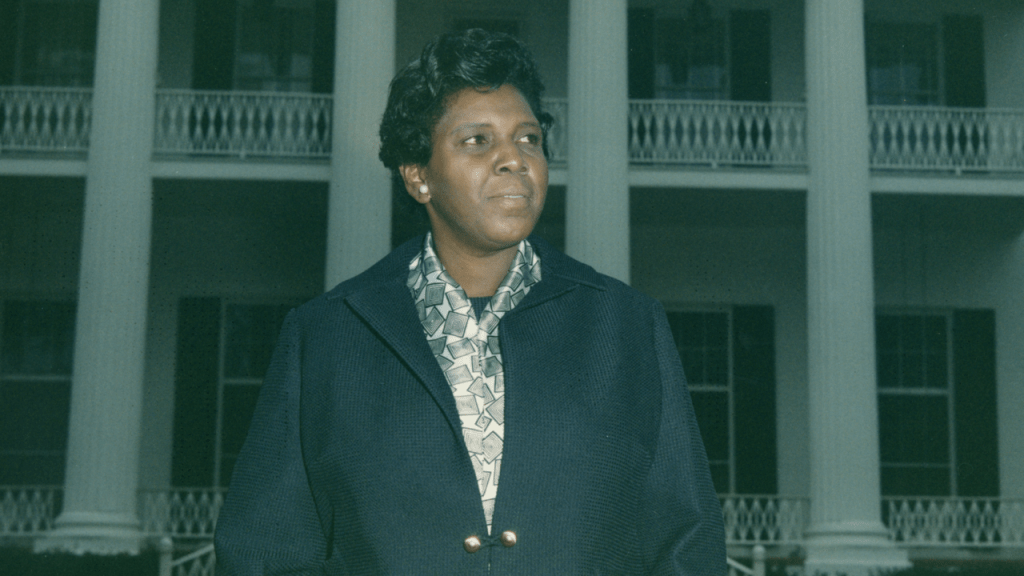
Barbara Jordan in The Inquisitor
The Tribeca Festival lineup includes another portrait of a Congressional pioneer. Barbara Jordan (1936-1996) was the first Southern African-American woman elected to the House of Representatives and, for people of a certain age, an indelible public figure. The daughter of a Houston, Texas Baptist preacher, she was a champion debater at Texas Southern University, besting opponents from Yale and Brown. Having established a law practice at 24, she won election to the Texas Senate in 1966 and rose to the U.S. Congress in 1972, earning a seat on the House Judiciary Committee. There, she made a huge impact with her opening statement during the Nixon impeachment hearings. No one who watched and listened could forget her deep, booming, eloquent voice.
Angela Lynn Tucker’s absorbing documentary The Inquisitor chronicles Jordan’s remarkable career and her ability to dismantle barriers through her intelligence, savvy, and down-to-earth charisma. She quickly discovered that nearly everyone loves coffee, noting, “I formed many friendships over a cup of coffee.” Ben Barnes, the former lieutenant governor of Texas, calls her “a good ole boy”—the sort of Texan who would forge an invaluable friendship with Lyndon Johnson.
Jordan’s historic, electrifying keynote speech at the 1976 Democratic Convention led many delegates to champion her for Vice President, and her support for Jimmy Carter was a key factor in his victory. Her greatest disappointment, apart from the failure of the Equal Rights Amendment, was being passed over by Carter for the Attorney General post.
From her first year in national office, Jordan battled multiple sclerosis, an affliction she kept largely hidden until her health issues forced her to step down in 1978. Also hidden: her relationship with her beloved longtime companion Nancy Earl, with whom she shared a home in Austin. Thus, another groundbreaker, even if the pragmatic politician in her preferred to keep that a secret.
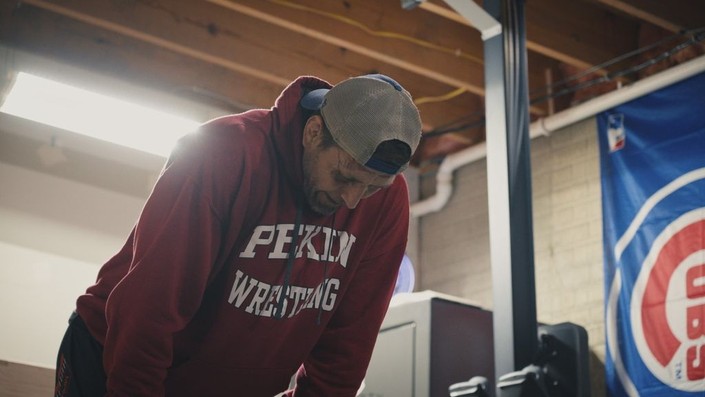
Surviving Ohio State
The Congressional Wall of Shame has many potential inductees these days, but a special place of disgrace must be reserved for the Dishonorable Jim Jordan of Ohio. Jordan only appears peripherally for the first 90 minutes of Surviving Ohio State, but this HBO documentary produced by George Clooney and Grant Heslov doesn’t let him escape unscathed from his role in covering up the rampant sexual abuse by The Ohio State University’s athletics doctor, Richard Strauss. Jordan, a onetime wrestling star and subsequent coach, was present and, as many victims attest, fully aware of Strauss’s invasive physical exams and his penchant for showering with and ogling all the campus’s sports teams. When the USA Gymnastics sex-abuse scandal made headlines in 2016, the Ohio State victims finally felt compelled to report their own traumas dating back to 1978 until Strauss retired in 1998. A university investigation revealed that Strauss, who committed suicide in 2005, had molested 117 men over the years and had raped at least 48. But, in the style of our Felon-in-Chief, Jordan’s response has been to “deny, deny, deny” any knowledge of this abuse.
Eva Orner’s doc features wrenching interviews with a number of Strauss’s victims, including two so traumatized they quit their teams and lost their scholarships. Among the interviewees is the daughter of fencing coach Charlotte Remenyik, who recalls her mom’s early warnings about Strauss that were quashed by the university. Indeed, the coverup was widespread, according to the film. The doc also takes issue with the settlements offered by the school, noting how low they are compared to other cases like the USA Gymnastics scandal at Michigan State University. (The terms of the OSU settlements also clear the school of any wrongdoing.) As one of the victims declares, “Am I a survivor or a victim? I’m a survivor of sexual assault, but a victim of Ohio State University.”
Pictured above: Sarah McBride
 Kevin Lally on Film
Leave a comment