Two documentaries at the Tribeca Fest show different sides of the evil that Vladimir Putin has unleashed upon the world—one specifically about a singular consequence of his brutal attack on the second-largest city in Ukraine, Kharkiv; the other more generally about his campaign of lethal vengeance against his enemies. Each is essential viewing in these troubling times.
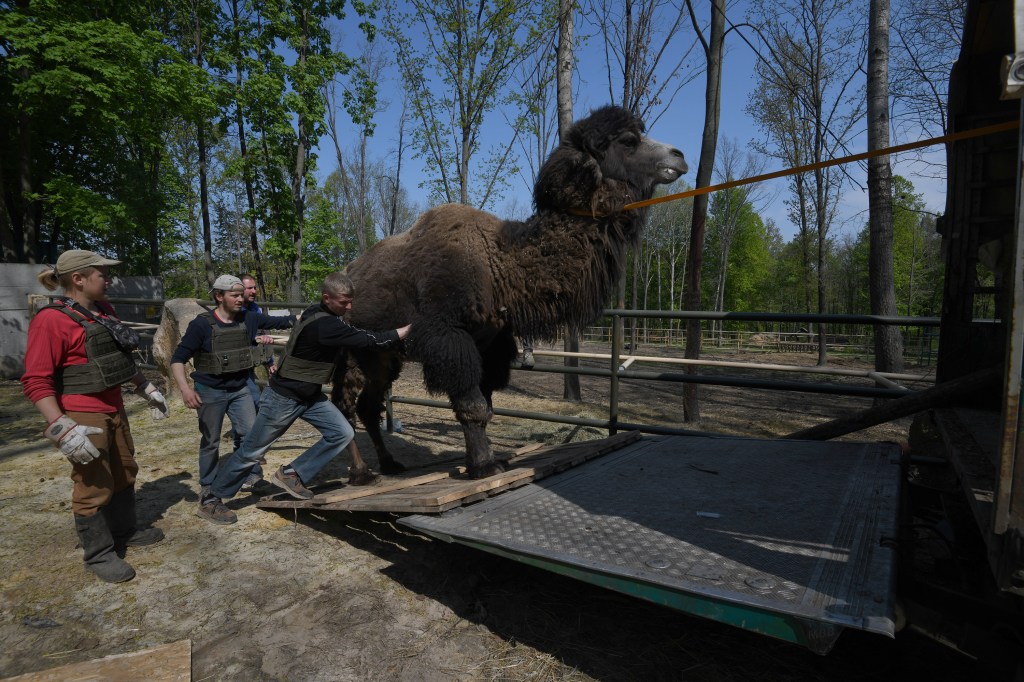
Checkpoint Zoo is the uplifting account of the fate of Kharkiv’s Feldman Ecopark, a combination zoo and learning center less than 30 kilometers from the Russian border. When Putin’s war against Ukraine commenced, the park—filled with 5,000 animals of all kinds—found itself situated in the “grey zone” between the Ukrainian and Russian fighting forces. The park’s staff dropped from 100 to 10 employees, but with the help of a group of brave volunteers, they became determined to evacuate the animals amidst the shelling of the city. We become intimately acquainted with these passionate animal lovers, including Tymofii, a young Polish veterinarian who always has a smile on his face, and Svitlana, an older female employee whose devotion to her “children” is palpable. And we of course feel for the creatures terrified by the frequent sounds of nearby bombs. The human rescuers are philosophical about their perilous mission: “That’s our job, shelling or no shelling.”
The film is not without its individual tragedies: an employee who is fatally mauled by a traumatized lion; a teenage victim of an attack on the rescuers in the final days of their campaign. The latter is deeply felt by the founder of the park, entrepreneur Oleksandr Feldman, whose own estate becomes a temporary home for many of the animals. You’ll come away from Joshua Zeman’s film awed by the everyday courage of its army of heroes. And more than ever convinced, as one employee observes, that “many animals are human, and a whole lot of people are animals.”
Another courageous group of people is featured in director James Jones’s Antidote, the title referring to Putin’s heartless penchant for poisoning anyone he perceives as a significant threat to his autocratic rule. The main protagonist here is Bulgarian investigative reporter Christo Grozev, former lead Russia investigator with the crusading Dutch news organization Bellingcat. One of Grozev’s main inquiries in recent years has been tracking down the culprits in high-profile poisonings of anti-Putin activists. Early in the film, the reporter comes to the aid of one of his sources, an unnamed scientist who blew the whistle on Putin’s poison-making program. We actually watch as the scientist, whose face is digitally altered, flees through a field to a car waiting to transport him to safety in the European Union.
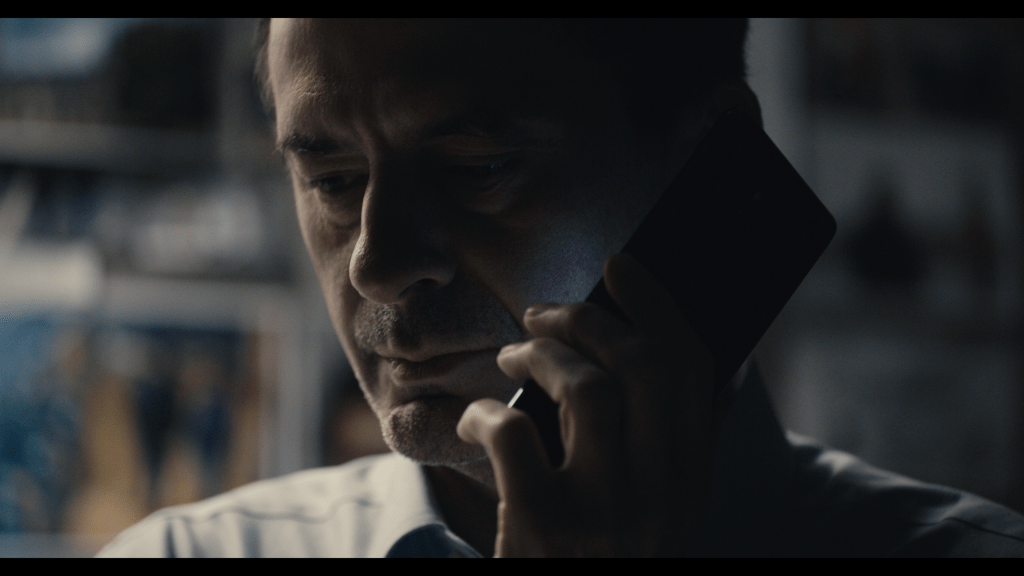
Christo Grozev. Photo by Edgar Dubrovskiy, courtesy of Passion Pictures.
The film also focuses on the fate of Russian opposition leader Vladimir Kara-Murza, who was poisoned twice and is currently serving a long prison sentence for alleged treason. His wife, Evgenia, makes an extremely eloquent on-camera spokesperson for her husband’s cause.
In the midst of production, Grozev, then living in New York, became a larger part of the story. Putin essentially put out a fatwa on him, stating that the Vienna resident would be arrested if he ever set foot in Europe. Things turn even darker when Grozev’s outspoken father in Vienna suddenly becomes incommunicado; later on Grozev learns that his dad has been murdered.
Grozev has been courting this kind of danger for years: He was a key ally of the famed opposition leader Alexei Navalny, also a poisoning victim, who recently died in prison under mysterious circumstances. Antidote, which tells its story with sophisticated graphics (as if the stakes weren’t compelling enough), is a vital, intimate look at heroes battling a historic monster, and the grace and courage it takes to continue the fight.
At top: Rescuing a camel at Feldman Ecopark. Photo by Carol Gazy.
 Kevin Lally on Film
Leave a comment