
It’s shocking but apparently true: Film at Lincoln Center is currently presenting the first-ever New York City retrospective of one of the greatest movie stars in history, Sophia Loren. Over the course of her seven-decade career, the native of Naples enjoyed success in both Italy and Hollywood, in both comedies and dramas, co-starring with the likes of Cary Grant, Gregory Peck, Marlon Brando, Paul Newman and, in 14 features, the great Marcello Mastroianni. She was undoubtedly an international sex symbol, but she quickly proved her bona fides as a formidable actress, becoming the first actor to win an Oscar for a performance in a foreign language for the powerful Two Women.
The Lincoln Center retrospective includes that classic plus 12 other essential Loren films including Marriage Italian Style, Arabesque, A Special Day, and the world premiere of a 4K restoration of her great early comedy Too Bad She’s Bad. The series opened with her most recent film, the poignant The Life Ahead (2020), directed and co-written by her son, Edoardo Ponti. (In a post-screening Q&A, Ponti was asked to name the first film of his mother’s he ever saw—he answered that he probably heard his first Loren film in the womb, during the 1973 production of The Voyage.) We met with the erudite Mr. Ponti a few hours before the series’ opening night.
Your mother turns 90 in September. May I ask how she’s doing?
Of course. She’s doing exceptionally well. You know, she had this fall last autumn, but she’s a trouper and took it upon herself to undergo physiotherapy every day so that she wouldn’t have to walk with any kind of crutches or things. So now she’s been promoted from a crutch to a cane, which she’s bedazzled. She loves her cane, but ultimately she looks forward to being able to walk without any aid, which she will most certainly do in the next few months,
She’s only made two films in the last 14 years, and they were both directed by you. Was there a lot of persuasion involved?
Not persuasion, but she’s very careful in curating her legacy, so to speak. If she chooses to do a movie these days, it truly has to speak to her in every aspect. These two movies are both movies that she had wanted to do for a very long time. Jean Cocteau’s Human Voice is a piece of work that she was always interested in and intrigued by and very scared to undertake. And my mother is inspired when she’s nervous about undertaking something. And so she knew that this was a play that she wanted to tackle. And then The Life Ahead was a book that we had both admired over the years. And she had come to a time when she wanted to tell that specific story, which I also wanted to tell. So it was a good occasion to do it together.
So she really does curate what she does now.
Well, you know, she’s now of a certain age, and time is precious for all of us. She wants to live the kinds of experiences that really touch her soul.
I’m curious about your relationship as director and actress. Does she really want your direction on the set?
Well, yes, of course. But she’s very much a team player. She’s always been like that, she’s not at all a diva that sweeps onto set and calls the shots. She’s really not. She’s always been at the service of her character, at the service of the story, at the service of the vision of the director, in fact. So in that way, she’s always been an amazing partner, not only for me but for other directors. A great, great partner. And, by the way, that’s why directors want to work with her. It’s very rare that a director hasn’t worked with her more than once. And that’s very telling.
Are you able to set aside your relationship as mother and son?
We shouldn’t, because we use everything in our arsenal that we can to be able to communicate something. There are two or three pillars that the director needs in order to communicate to an actor. He needs to understand their language, so that he can elicit out of them the most truthful moments. And as a son, because of our relationship, clearly we speak the same language—we understand each other, and that language sometimes is expressed through looks, through gestures, not only through words. The other thing which is very important in the relationship between an actor and a director is trust. And obviously, we trust each other as human beings, so on set reigns an atmosphere that is absolutely open, absolutely judgment-free. And that allows her and myself to risk and to reach for certain moments that would be maybe complicated to reach for if we didn’t have that relationship, if that trust wasn’t established. And that trust is established also because we have a familial relationship.
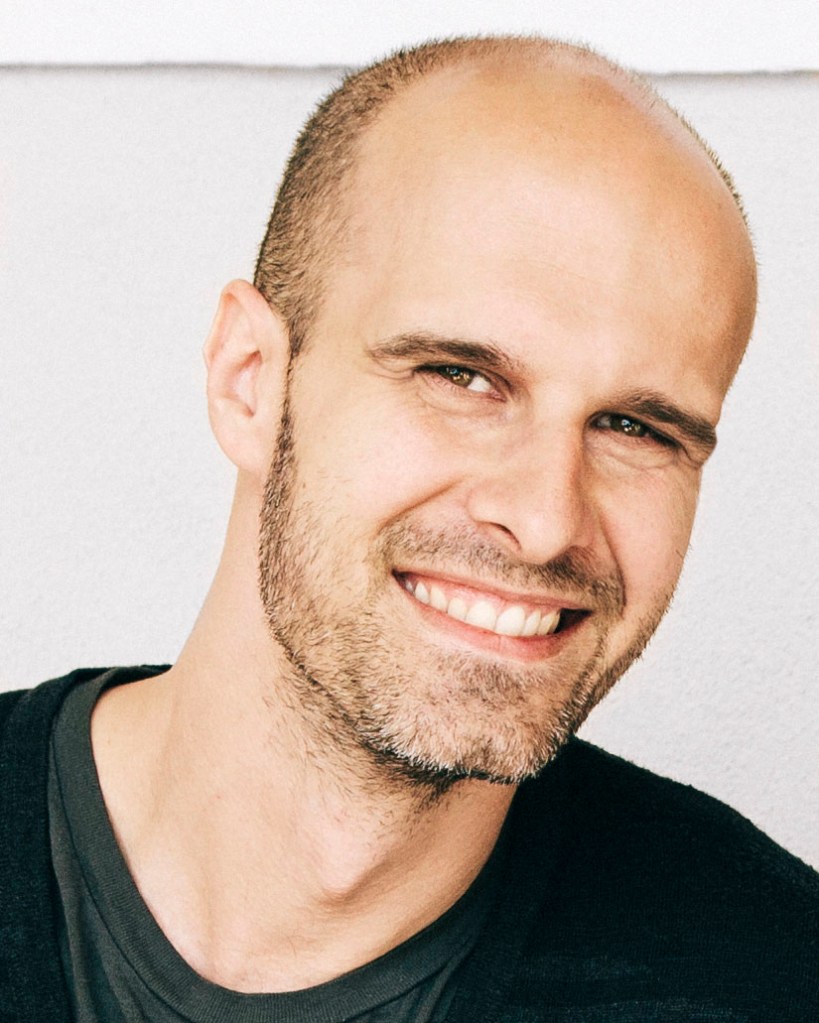
Edoardo Ponti
You were born in 1973, 20 years after she became a star. What were your impressions as a child of that world that you were born into?
Well, my parents always made sure that that world was as down-to-earth as possible. We were never really invited to partake in Hollywood parties or things. We were quite protected from all that, which was very important because we led quite a normal life. The only way that the film industry touched us was through dinner or lunchtime conversations about storytelling, about characters—it was never about the glamour of it all or the business of it all. It was always about the craft of it all.
Did she convey that regard for craft to you as you were developing as a filmmaker?
You know, craft is about sticking to it. Craft is about hard work. It’s about discipline. It’s about being able to harness inspiration. You don’t wait for inspiration. Inspiration comes as you work. Inspiration comes as you wake up in the morning and you start writing. And by the 30th minute, inspiration kicks in. Inspiration is something that happens not but for the grace of God. It happens because you actually work towards it.
Are there any films in this series that you think are going to be big surprises for people?
I think one of them is Too Bad She’s Bad.
Oh, I love that film.
Too Bad She’s Bad
It’s a beautiful movie. It’s the first time that my mother worked with Marcello Mastroianni. Just as you know where things are going to go with them in their careers, it’s kind of interesting to see the genesis of it all, directed by a wonderful, wonderful director, Alessandro Blasetti, who used to be great at shooting long takes so it has a theatrical quality. But his timing is amazing, his timing is perfect. He was actually one of the directors that my mother appreciated the most—I mean, along with the pantheon of directors that she worked with, from Vittorio De Sica to Ettore Scola to Lina Wertmuller. The greatest. But Blasetti was one of those that she particularly admired.
That film is so much fun.
And Vittorio De Sica is hilarious in the movie.
Is there something people don’t know about your mother that you’d like them to know?
I don’t know. I think people know that she’s actually quite shy. The one thing that people might not know is how she approaches every movie as if it was her first. There’s a certain humility to her approach, to her art, which is quite touching. And it shows the immense respect she has for the profession, that she never walks on set being cynical or jaded or having done this so many times. No, she approaches it with so much respect and so much humility that she truly, authentically feels like this is her first film.
The Life Ahead is such a beautiful film.
Thank you.
I’m curious about the relationship she developed with the young boy who co-stars with her.
It was her 120th movie, I don’t know. And it was his first, and she was so generous with him. She remembered what it meant to really be at the beginning of one’s career. And she remembered how Vittorio De Sica took her under his wing and helped her become the actress. She historically has always said that she owes almost everything to De Sica and my father [famed producer Carlo Ponti] and the other directors. But, really, De Sica was very much a spiritual, creative father for her. And I think that she took some of that and helped Ibra [Ibrahima Gueye], the actor who plays Momo, in the same ways. There was a generosity, there was a way that she would speak to him in between takes that truly helped him be more comfortable. And with comfort comes a certain relaxed state that allows you to enter the moment more quickly. She was a great support to us in helping him get to the performance that he ultimately got to.
Going back to your childhood, when did you come to the realization: My mother is a great artist—not just a star, but an artist?
That’s beautiful, by the way. I think I realized that my mother was an artist when I started working with her, because it’s when you’re in the trenches that you really understand the choices that an actor makes, and the choices that they don’t make sometimes are as important as the ones that they do make. And sometimes the choices that you don’t make are the ones that lead you to becoming an artist.
 Kevin Lally on Film
Leave a comment