In the pantheon of movie greats, there’s one star that has outlasted all others, lending spectacular support to everyone from Charlie Chaplin and Gene Kelly to Barbra Streisand and Robert De Niro. That star is New York City, the endlessly photogenic locale of countless movies since the silent era.
The list of New York-set films could fill an encyclopedia, and even the iconic ones would take up hundreds of pages. As we move further into the 21st century, location filming in the Big Apple takes on an even more magical quality. The Third Avenue elevated train line, since demolished, springs back to life in 1945’s The Lost Weekend. Judy Holliday drives round and round Columbus Circle, circa 1954, to gander at the giant billboard she’s rented to promote herself in It Should Happen to You. That tough neighborhood where the Sharks and the Jets rumble in 1961’s West Side Story? Just a few years later, it was transformed into Manhattan’s arts mecca, Lincoln Center.

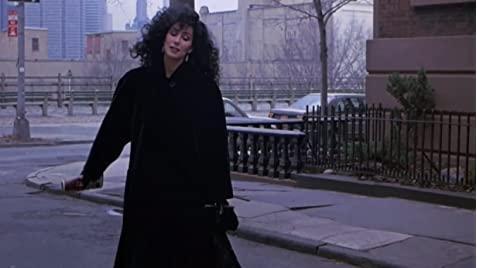
Some New York institutions seen in movies never seem to change. Tiffany’s, of the eponymous 1961 classic Breakfast at Tiffany’s, still casts a spell on Fifth Avenue for the romantically inclined with disposable incomes. The Carnegie Deli, the famed sandwich emporium on Seventh Avenue, looked just as it did in Woody Allen’s 1984 comedy Broadway Danny Rose until the day it closed in 2016. Brooklyn Heights’ Cranberry Street, with the Lower Manhattan skyline in the background, is unaltered from the night Cher walked home from a life-changing date in 1988’s Moonstruck.
For some truly breathtaking sights, check out New York as it appeared in the silent era. Harold Lloyd’s Speedy and King Vidor’s The Crowd, both from 1928, feature delightful scenes of their lead characters frolicking at Coney Island in its heyday. Speedy also offers the remarkable sight of a horse-drawn carriage careening through Washington Square (plus special guest star Babe Ruth in a nerve-racking drive to Yankee Stadium!). The Crowd, meanwhile, presents a chilling portrait of anonymous Manhattan office drones toiling amidst a seemingly endless sea of desks, an image borrowed 32 years later by Billy Wilder for his Oscar-winning The Apartment.

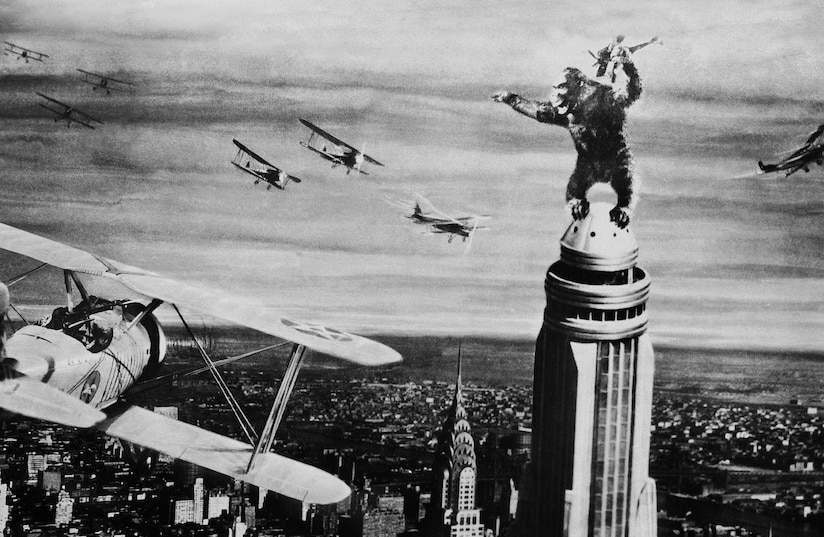
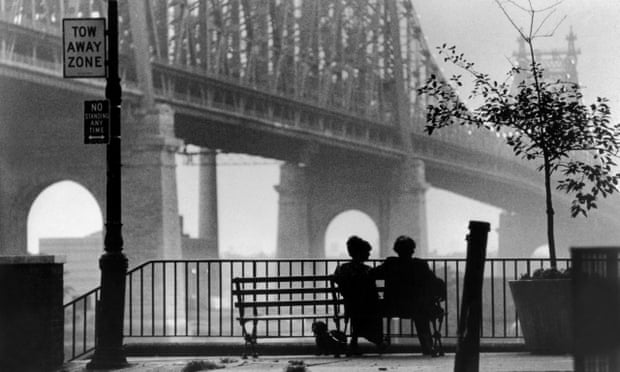
Sometimes, a movie will solidify the iconic status of a New York landmark. Who can think of the Empire State Building without the image of that giant ape King Kong scaling its heights within two years of its completion? The Queensboro Bridge gained luster as the backdrop in a gorgeous black-and-white image of Woody Allen and Diane Keaton sitting on a bench in 1979’s Manhattan. The same could be said for the Brooklyn Bridge’s less celebrated neighbor, the Manhattan Bridge, as viewed from Brooklyn’s Water Street in a striking shot from Sergio Leone’s 1983 Once Upon a Time in America. And two Manhattan buildings upped their fame quotient thanks to hit movies: the Dakota, the setting for the demonic doings in Roman Polanski’s 1968 horror classic Rosemary’s Baby (12 years before the tragic murder of Dakota resident John Lennon); and 55 Central Park West, another hub for supernatural mayhem in 1984’s Ghostbusters.
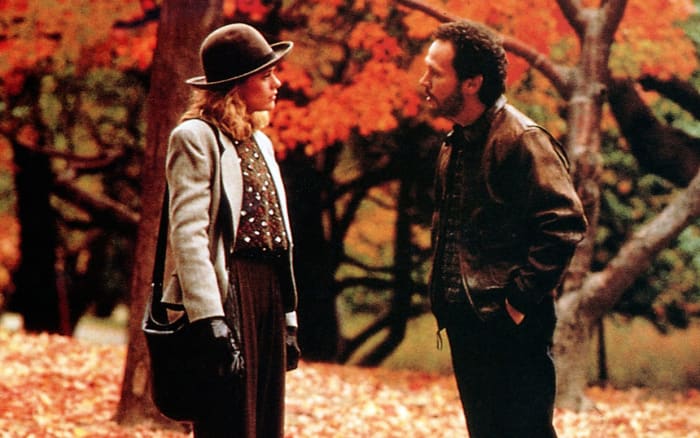
Certainly one of the most photogenic locales in New York is Central Park, featured in more than 300 films. Documentary maker Jack Lemmon pursues Judy Holliday there in the aforementioned It Should Happen to You. Harry and Sally have a heart-to-heart in the park in classic rom-com When Harry Met Sally. Macaulay Culkin meets a sweet homeless woman who camps out there in Home Alone 2. Harry Belafonte is threatened by mobsters at the Central Park Carousel in 1959’s Odds Against Tomorrow, while Ron Leibman is forced to strip by muggers on his nightly run between the East Side and West Side in the queasily irreverent Where’s Poppa? (1970). Central Park is also the setting for two exuberant musical numbers, in Milos Forman’s film of Hair and the Disney fantasy Enchanted.
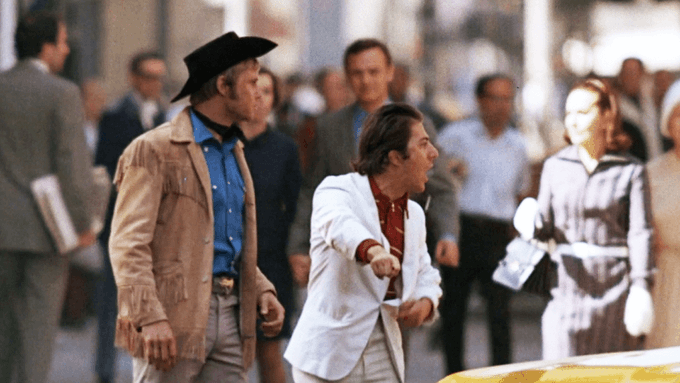
New York movies also offer a perversely compelling look at the seamy side of the city. Jules Dassin’s The Naked City (1948), centered on the investigation of a young model’s murder, is considered a cinema landmark for its extensive location shooting and documentary style. Anthony Mann’s Side Street (1950), about a thief on the run, features a thrilling car chase through the narrow canyons of Lower Manhattan. Alexander Mackendrick’s classic Sweet Smell of Success (1957), a vicious portrait of an amoral Walter Winchell type and a craven press agent, offers gorgeous black-and-white photography by James Wong Howe of locations like the 21 Club, the Brill Building, and Times Square. John Schlesinger’s Midnight Cowboy (1969), the only X-rated film to win the Oscar for Best Picture, centers on the friendship of a would-be hustler and a limping con man; at one point, they end up at a Warhol-like party with cameos from real-life Warhol “superstars.” The movie also has Dustin Hoffman shouting “I’m walkin’ here!” at a taxi driver in a crosswalk, words any true New Yorker can relate to.
Midnight Cowboy ushered in an entire decade celebrating sleazy NYC: Beau Bridges as a hapless gentrifier in Brooklyn’s changing Park Slope in The Landlord (1970); Gene Hackman hunting a French drug kingpin and causing vehicular mayhem beneath Bensonhurst’s elevated train tracks in William Friedkin’s The French Connection (1971); Richard Roundtree as New York’s baddest crimefighting mutha in Shaft (1971); Charles Bronson as a merciless vigilante in 1974’s Death Wish (when Columbus Avenue was considered dangerous!); Robert Shaw hijacking a subway car and holding the passengers for ransom in The Taking of Pelham One Two Three (1974); and Robert De Niro as budding psychopath Travis Bickle in what may be the definitive ’70s New York movie, Martin Scorsese’s Taxi Driver (1976).
Scorsese, of course, is one of the great New York filmmakers, whose Big Apple catalog includes Mean Streets, Raging Bull, The King of Comedy, After Hours, Goodfellas, The Age of Innocence, Gangs of New York, The Wolf of Wall Street, and the movie that gave us NYC’s unofficial theme song, New York, New York. He joins three other formidable auteurs closely identified with the city. The versatile Sidney Lumet brought us a musical fantasia vision of New York with The Wiz, and two searing portraits of police corruption, Serpico and Prince of the City. But arguably his greatest triumph was Dog Day Afternoon (1974), which begins with a wonderful montage of New York street scenes, and goes on to recreate the wild Brooklyn media circus that grew around one of New York’s most bizarre bank robberies.

You can’t mention Brooklyn without evoking the name of groundbreaking Brooklynite Spike Lee. He first made a name for himself with the low-budget but resourceful She’s Gotta Have It (1986), followed three years later by his masterpiece Do the Right Thing, a visually dazzling portrait of a summertime Bedford Stuyvesant about to explode from simmering racial tensions. Many more great New York portraits followed: Mo Better Blues, Jungle Fever, Malcolm X, Crooklyn, Clockers, Summer of Sam, and 25th Hour among them.

The fourth New York filmmaking institution is the now-controversial Woody Allen, who seemed firmly planted in Manhattan until he ventured to Europe in the 2000s. Whatever your thoughts about Allen, movies like Annie Hall, Manhattan, Broadway Danny Rose, Hannah and Her Sisters, Radio Days, Crimes and Misdemeanors, and Bullets Over Broadway are essential to the New York canon.
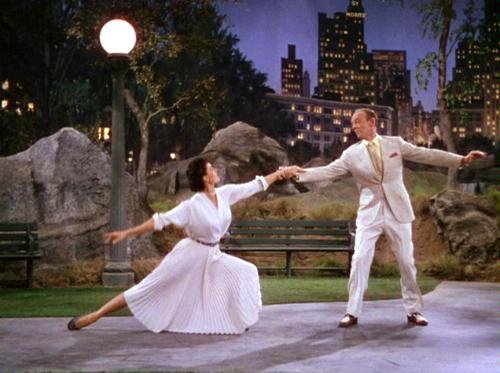
Finally, when is a New York film not a New York film? (Or is it?) Alfred Hitchcock’s Rear Window, with its facsimile of a Greenwich Village apartment looking out on a cross-section of humanity across the courtyard, may have been shot on a Hollywood soundstage, but who would argue that it’s not one of the immortal New York movies? Fred Astaire and Cyd Charisse’s swooningly romantic “Dancing in the Dark” in Vincente Minnelli’s The Band Wagon (1953) may take place in a fake Central Park, but it’s still one of the most dazzling Central Park sequences ever. Homebody Stanley Kubrick may have recreated New York City at Britain’s Pinewood Studios for his final film, Eyes Wide Shut, but hey, who’s going to fight with Stanley Kubrick?
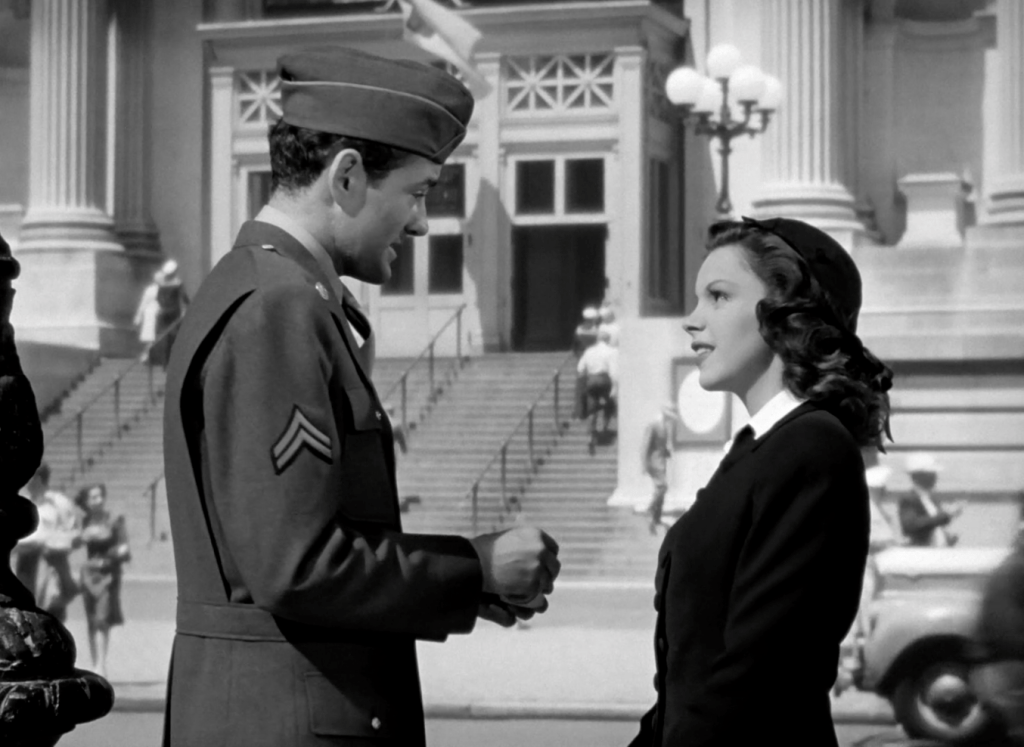
And I would argue that one of the very greatest New York movies was shot largely in Hollywood: Vincente Minnelli’s The Clock, from 1945. Judy Garland plays a young secretary who meets a soldier on 48-hour leave (Robert Walker) at Penn Station. He’s starving for company in this big, daunting city, and by the end of a long day they’ve fallen in love and decide to get married. But getting hitched on a tight deadline is no easy feat. Although a lot of real background footage (including the Central Park Zoo) was utilized, Garland and Walker never set foot in the city. Amazingly, Penn Station, the Astor Hotel (home of the titular clock), and the Grand Central subway station are all MGM sets. But what gives The Clock its New York-ness is its subsidiary characters: James Gleason as a lonely milkman who gives the lovers a ride during his nighttime rounds; the cadre of bureaucrats the pair must contend with in their quest to get married; and that swarm of diverse extras in the Penn Station scenes. Walker’s whirlwind tour of New York is the audience’s too.
New York and the movies—what a duo. And we haven’t even talked about Saturday Night Fever, The Godfather, On the Town, Superman, Spider-Man, Shadows, Fame, Wall Street, Funny Girl, Working Girl, Three Days of the Condor, Escape from New York, Cotton Comes to Harlem, The Immigrant, Men in Black, Marathon Man, Uncut Gems, Metropolitan, Klute, Sid and Nancy, Miracle on 34th Street, 42nd Street…
This essay was inspired by my good friend Frank de Falco, one of New York City’s top tour guides, specializing in informative tours for Italian visitors to the city.


 Kevin Lally on Film
Leave a comment