It’s probably a coincidence, but a recurring theme has emerged at this year’s New York Film Festival: iconic men and their long-suffering female partners. Three films focus on famous, larger-than-life males, but with equal weight given, story-wise, to the women who put up (or don’t) with their titanic, self-aggrandizing egos.
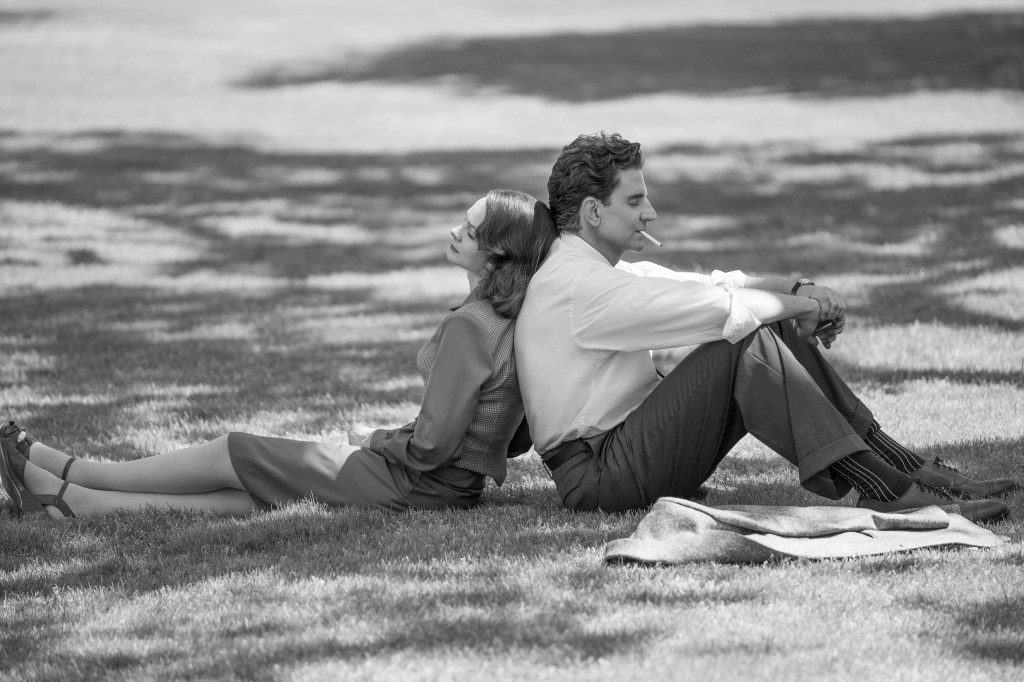
For the first half of Bradley Cooper’s Maestro, I thought: Where’s the drama? The film begins with an interview with the elderly Leonard Bernstein (Cooper), then flashes back to his first, triumphant big break in 1943, as a last-minute substitute for the ailing Bruno Walter, conducting (without rehearsal) the New York Philharmonic at Carnegie Hall. At a boisterous party, he meets Costa Rica-born actress Felicia Montealegre (a compelling Carey Mulligan), and the sparks instantly fly. They marry, even though Felicia is quite aware that Lenny is bisexual. Before long, we’re at a re-enactment of the Bernsteins’ 1955 TV interview with Edward R. Murrow, she a thriving Broadway performer, and he of multiple successes as a conductor and Broadway and classical composer. (In a telling fantasy sequence, Bernstein declares, “I want a lot of things” before joining a chorus of lithe dancers in sailor suits rehearsing Jerome Robbins’s “Fancy Free” ballet.) It’s all idyllic and the height of New York glitter and sophistication.
Then, the cracks begin to appear. During one of the couple’s parties at their apartment in the Dakota, Felicia sees her husband seduce a much younger man, Tommy, who becomes a major presence in his life. Felicia’s hurt and frustration finally boil over during a Thanksgiving gathering (with the giant Macy’s balloons surreally passing by the windows), as she lashes out at her husband’s selfish prioritization of his own insatiable desires. Yet Maestro remains a love story: After they separate, Felicia admits, “It was my arrogance to think I could survive on what he could give. I miss him, that child of mine.”
There’s been much discussion of Cooper’s more prominent nose as seen in preview photos, but my verdict is that Kazu Hiro’s prosthetic makeup is excellent and not distracting at all. Cooper also captures Bernstein’s infectious energy, especially during a remarkable single take as he conducts Mahler’s Symphony No. 2 with the London Symphony Orchestra at Ely Cathedral. Cooper, who made a sensational directing debut with A Star Is Born, shows that wasn’t a fluke with bravura sequences like that, and he elicits strong performances from the entire cast. At the festival press conference, Bernstein’s daughter Jamie said it was Cooper’s idea to rework co-writer Josh Singer’s original screenplay and make it more of a portrait of a marriage, an approach she enthusiastically endorsed.
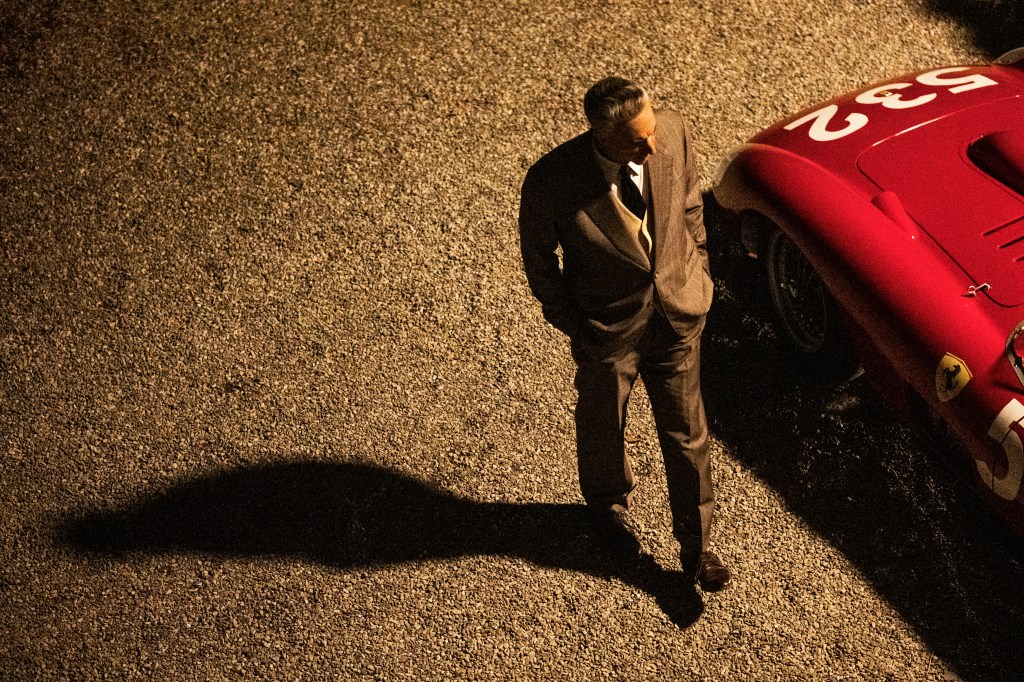
An even rockier marriage is explored in Ferrari, director Michael Mann’s account of a fraught period in the life of the famed auto designer. Enzo Ferrari (Adam Driver) may be a brilliant designer, but his primary obsession is winning races against his chief rival, Maserati. He’s also a terrible businessman—in 1957, when the film is set, his company is on the verge of bankruptcy, mainly due to Enzo’s stubborn refusal to increase production and seek an investment partner like Fiat or Ford. Complicating matters, his wife Laura (Penélope Cruz) holds the majority interest in the company, and she’s furious about both her husband’s philandering and his inability to prevent their son’s death from muscular dystrophy. Laura becomes even more inflamed when she learns that Enzo has a longtime mistress, Lina (Shailene Woodley), and a son from that liaison.
Enzo, meanwhile, is preoccupied with winning the cross-country Mille Miglia competition—victory, he’s convinced, will put his company back on sound financial footing. But the race brings tragedy—one of the most horrific sights ever put onscreen—and the potential demise of the Ferrari brand.
For the first hour, I wasn’t particularly engaged by Ferrari. I have no interest in auto racing, and the decidedly non-Italian Driver (with the same bogus accent he had as Maurizio Gucci) gives a cold, aloof performance that’s off-putting, even if it’s true to Ferrari’s arrogant nature. But Penélope Cruz rescues the film (and the company), a furious force of nature who’s also a sly and savvy businesswoman. And, much more interesting than rounding a racetrack, that 1,000-mile race across Italy is spectacular and excitingly filmed.
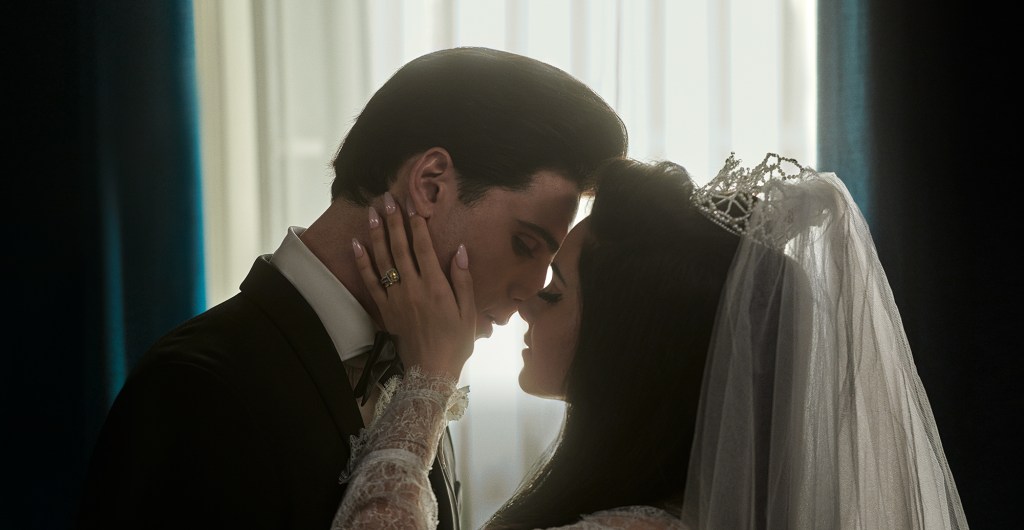
That’s two New York Film Festival entries where the woman in a legendary man’s life becomes the stealth protagonist. And you’d certainly expect the same of Priscilla, from the title alone. Last year brought Baz Luhrmann’s gaudy, Oscar-nominated Elvis; now, like an answer song, Elvis Presley’s wife Priscilla gets her turn in the spotlight thanks to writer-director Sofia Coppola. The stepdaughter of a U.S. Air Force captain transferred to Wiesbaden, West Germany, Priscilla Beaulieu was just 14 in 1959 when she met 24-year-old Elvis, who had been drafted and was also now stationed in Germany. Despite their age difference, the two bond at a party over their mutual homesickness; Elvis is surprisingly sad and vulnerable, still mourning the recent death of his beloved mother. The pair have a chaste romance until Elvis returns home seven months later. They don’t see each other again until the summer of 1962, and less than a year later Elvis somehow convinces Priscilla’s strict parents to let her stay at his home in Memphis on the condition she graduates from high school there. Priscilla claimed that she remained a virgin until their marriage in May 1967.
Living at Graceland with the King of Rock ’n’ Roll would seem to be an impossible dream come true for a sheltered teenager. But Coppola quickly reveals what a strange existence it is. Elvis is often away making movies, and when he does pay attention to her, he’s usually with his posse of sycophantic, raucous male band members and buddies. (They’re even there at the dress shop, passing judgment as Elvis oversees her new wardrobe.) Elvis instructs Priscilla to dye her hair jet-black and slather on mascara until she looks like a parody of a country star. Gradually, the man who once seemed so sensitive transforms into an unfaithful control freak with a short temper, an addiction to pills, and manic eccentricities. Coppola incrementally shows Priscilla developing a backbone and ultimately making the decision to leave her gilded prison.
Twenty-six-year-old Cailee Spaeny gives a nicely understated performance as the wide-eyed Priscilla, and is surprisingly persuasive as a teenager. And Jacob Elordi (“Euphoria”) is magnetic as this dark, complex version of Elvis—and looks the part even more than last year’s Oscar-nominated Austin Butler. The story of Priscilla Presley is a perfect fit for a writer-director whose films often center on young women finding their voice. And the women behind iconic men are certainly raising their voices at this year’s NYFF.
Top photo: Carey Mulligan and Bradley Cooper in Maestro. Photos courtesy of Film at Lincoln Center.
 Kevin Lally on Film
Leave a comment